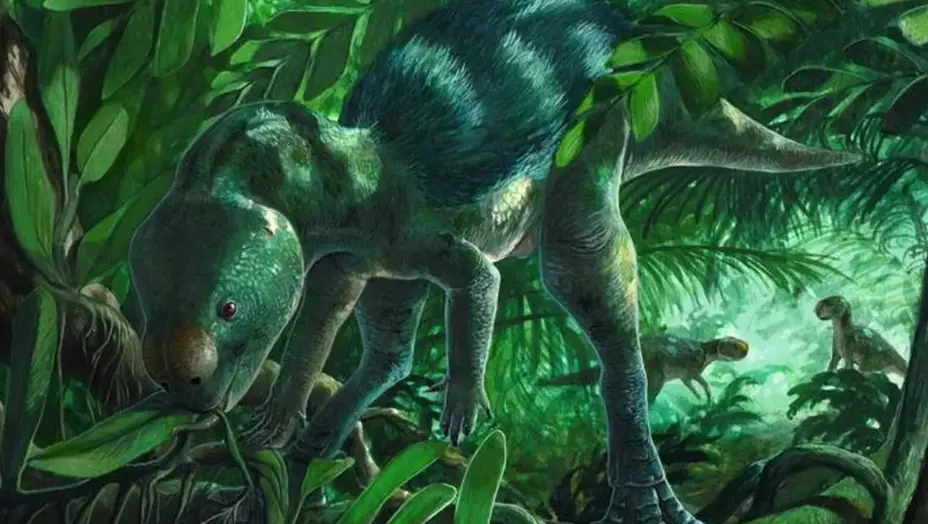
Spain new dinosaur species discoveries are attracting global scientific attention after paleontologists confirmed that fossil remains found in northern Spain belong to a previously unknown dinosaur. Researchers believe this small herbivorous dinosaur could help close a 70-million-year gap in the evolutionary history of plant-eating dinosaurs.
The fossils were uncovered in the Castrillo de la Reina Formation in Spain, with the first remains discovered as early as 1998. At the time, scientists could not determine whether the bones belonged to young individuals of a larger dinosaur or to adults of a much smaller species.
Identified as a New Species: Foskeia pelendonum
After studying at least five different fossil specimens, researchers concluded that the remains belong to a distinct and very small dinosaur species now named Foskeia pelendonum. Despite its modest size, scientists say this dinosaur may represent a crucial “missing link” in herbivorous dinosaur evolution.
A recent study published in Papers in Palaeontology used micro-CT scanning technology to analyze the internal structure of the bones. These scans revealed that at least one specimen had reached sexual maturity, confirming that the fossils are not juvenile remains of a larger species.
Paul-Emile Dieudonné, one of the lead researchers, stated that these findings strongly support the idea that Foskeia pelendonum was a fully grown, small-bodied dinosaur belonging to a separate evolutionary line.
Why This Dinosaur Matters for Evolutionary Science
The name Foskeia pelendonum honors the Pelendones, a Celtic community that lived in northern Spain before Roman times. What makes this species especially important is its unusual anatomy, particularly in its teeth, jaw, and hind legs, which differs significantly from known relatives.
Earlier studies from 2016 suggested that some of these fossils might be related to Muttaburrasaurus, a dinosaur from Australia that could grow up to 8 meters long. In contrast, Foskeia pelendonum is considered one of the smallest ornithopods ever discovered.
Paleontologist Marcos Becerra emphasized that small size does not mean simple evolution. According to him, the skull and skeletal structure of Foskeia show surprisingly complex and unique traits.
Filling a 70-Million-Year Gap
Researchers involved in the study believe that this species could help bridge a 70-million-year evolutionary gap among herbivorous dinosaurs. Tábata Zanesco Ferreira noted that the discovery may reshape how scientists understand the relationships between early plant-eating dinosaur groups.
Penélope Cruzado-Caballero added that the unusual anatomical features of Foskeia pelendonum could force scientists to reconsider existing evolutionary family trees.
From Four Legs to Two
Evidence suggests that Foskeia pelendonum may have walked on four legs when young and gradually transitioned to two-legged movement as it matured. This shift could indicate a flexible lifestyle adapted to survival in environments filled with dangerous predators.
Koen Stein also proposed that the dinosaur’s metabolism may have been closer to that of small mammals or birds, allowing for faster movement and better escape abilities.
Ongoing Classification Debate
Scientists currently place Foskeia pelendonum within the European Rhabdodontomorpha group, which could provide valuable insight into the early evolution of this lineage. However, the study also mentions the possibility of classifying the species under the broader Phytodinosauria grouping.
This classification remains controversial, as paleontologists continue to debate whether such broad evolutionary categories accurately reflect dinosaur relationships.
A Discovery That Could Rewrite Dinosaur History
With its unique anatomy, small size, and evolutionary importance, Spain new dinosaur species Foskeia pelendonum stands out as one of the most significant paleontological discoveries in recent years. As further studies continue, this tiny dinosaur may play a big role in reshaping our understanding of dinosaur evolution in Europe.
Leave a Reply