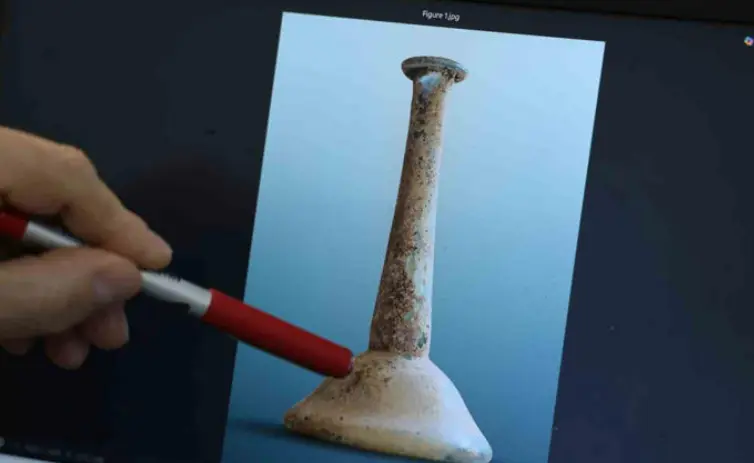
Ancient Roman feces medicine discovery has stunned the archaeology and medical history worlds after Turkish scientists uncovered direct physical proof of a treatment that was long considered nothing more than an unpleasant rumor from ancient texts. What was once dismissed as exaggerated or symbolic writing has now been confirmed inside a 1,900-year-old medical bottle.
This extraordinary finding proves that ancient Roman doctors knowingly used human feces as part of medical treatments—and they were careful to hide this disturbing detail from their patients.
A 1,900-Year-Old Bottle That Changed Medical History
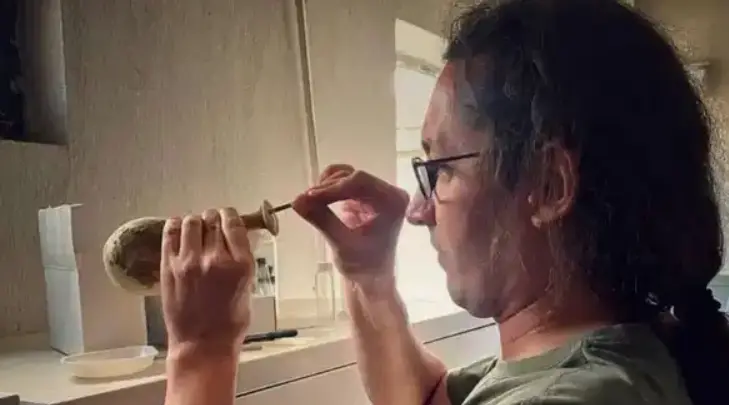
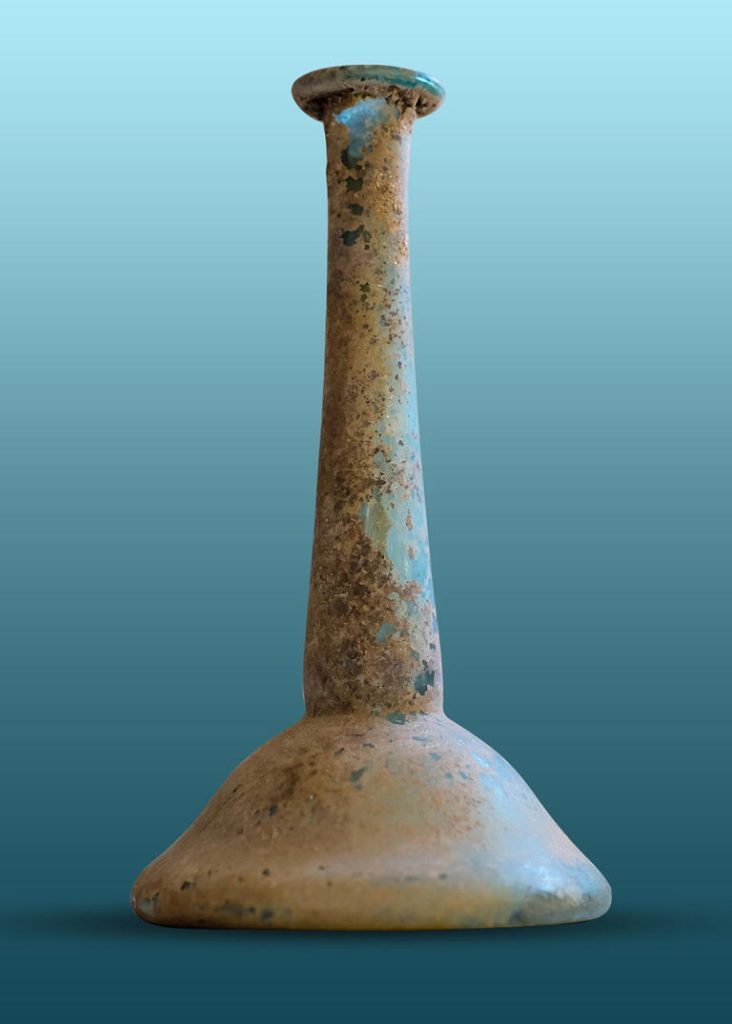
The discovery was made by a Turkish research team led by archaeologist Cenker Atila from Sivas Cumhuriyet University. While examining ancient glass artifacts in the Pergamon Museum, the team noticed unusual residue at the bottom of a Roman-era glass bottle known as an unguentarium.
Suspecting the material was more than dirt or decay, the researchers conducted laboratory tests with chemists and medical historians. The results were shocking: the bottle contained human feces, mixed with thyme extracts and olive oil.
This was not accidental contamination. It was a carefully prepared medical mixture.
Ancient Doctors Knew — But Patients Were Never Told
Ancient medical texts frequently mention the use of feces in treatments, especially for infections, wounds, and inflammation. However, until now, there had never been physical evidence to prove these claims.
The newly confirmed Ancient Roman feces medicine discovery directly supports writings attributed to Galen, one of the most influential doctors of antiquity. According to historical records, Galen openly warned his students:
“Never tell the patient what this medicine contains, or they will refuse to use it.”
The discovery shows that Roman physicians were fully aware of how disturbing the treatment was—and deliberately masked both its smell and its origin.
Why Thyme Was Added to the Mixture
Laboratory analysis revealed high concentrations of thyme, a plant known for its antibacterial properties. Researchers believe thyme served two purposes:
- Medical benefit, as a natural disinfectant
- Odor control, masking the strong smell of feces
Remarkably, scientists reported that when the bottle was opened after nearly two millennia, no foul odor was present, suggesting the preservative qualities of thyme were extremely effective.
Proof That Ancient Medicine Was More Advanced Than We Thought
Beyond the shock value, this Ancient Roman feces medicine discovery has major scientific importance. It suggests that ancient doctors understood something modern medicine only formally recognized in recent decades: the role of gut bacteria in healing.
Today, fecal microbiota transplantation (FMT) is used to treat severe intestinal infections by transferring healthy bacteria from a donor. The Roman-era mixture shows that similar principles were applied nearly 2,000 years ago—without microscopes or modern science.
From Disgust to Discovery
Although the idea may seem revolting today, this treatment was considered cutting-edge medicine in its time. In a Roman pharmacy in Pergamon, this mixture would have represented hope for patients suffering from infections, wounds, and reproductive disorders.
The discovery has drawn widespread attention across European scientific circles and is now regarded as a milestone in the study of ancient medicine. Turkish scientists have not only confirmed a controversial medical practice—they have rewritten part of medical history.
Leave a Reply