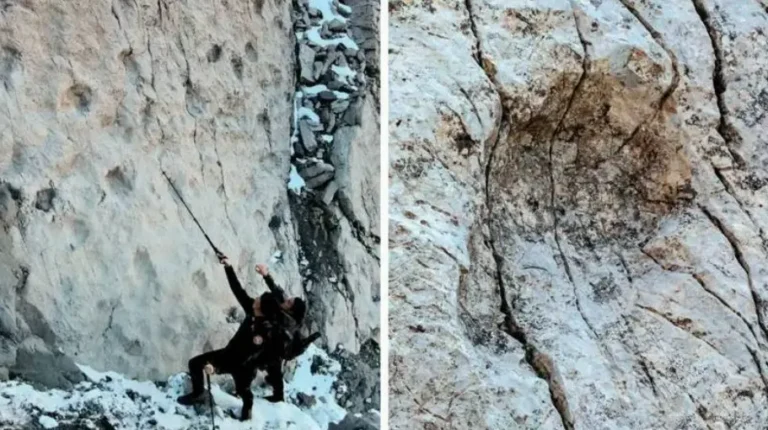
Dinosaur footprints discovered in Italy have stunned scientists and history enthusiasts alike. In the Stelvio National Park, located in northern Italy near the Swiss border, thousands of fossilized dinosaur tracks dating back around 210 million years have been uncovered. This extraordinary find is being described as a “scientific treasure,” offering a rare glimpse into the Triassic period when dinosaurs roamed what is now the Alps.
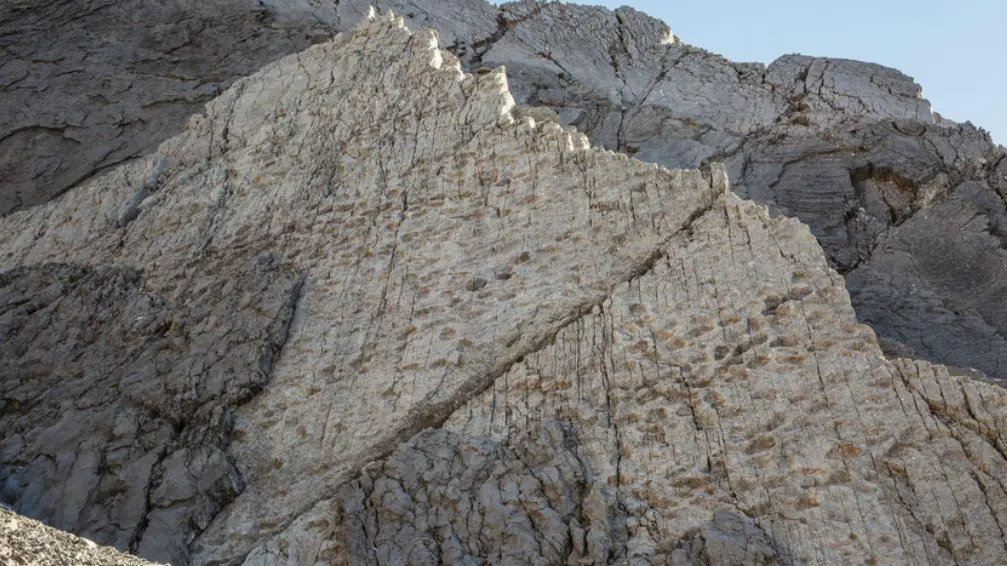
The footprints, some measuring up to 40 centimeters in diameter, are arranged in parallel lines across steep mountain slopes. Many of them clearly show the impressions of toes and sharp claws, revealing details about the creatures that left them behind. Experts believe these tracks belonged to prosauropods—herbivorous dinosaurs with long necks, small heads, and distinctive clawed feet.
How the Footprints Were Found
The discovery was first made in September when photographer Elio Della Ferrera noticed unusual patterns stretching for hundreds of meters along a vertical rock wall in Stelvio National Park. What appeared to be simple indentations turned out to be thousands of fossilized footprints preserved for over two hundred million years.
Paleontologist Cristiano Dal Sasso from Milan expressed his amazement: “I never imagined such an extraordinary discovery would be found in my own region.” According to Dal Sasso, the site is essentially an open‑air archive of prehistoric life, filled with evidence of dinosaurs moving in groups across tidal flats that later became part of the Alps.
Insights Into Dinosaur Behavior
The arrangement of the footprints suggests that these dinosaurs traveled in herds, moving in coordinated patterns. Some formations even hint at defensive behaviors, such as gathering in circular groups. While prosauropods typically walked on two legs, researchers found occasional handprints alongside the tracks, indicating that the animals sometimes rested by placing their forelimbs on the ground.
Smaller footprints were also identified, pointing to the presence of juvenile dinosaurs within the herds. This evidence provides valuable insight into the social structure and daily life of these prehistoric creatures.
Cultural and Scientific Significance
Italy’s Ministry of Culture has emphasized the importance of this discovery, noting that the site is remote and difficult to access. To study the area safely, drones and remote sensing technologies will be used. The ministry also highlighted the symbolic timing of the find, as Stelvio National Park is located near venues for the upcoming Winter Olympics. Officials described the discovery as a “passing of the torch between nature and sport, connecting past and present.”
Photographer Elio Della Ferrera hopes the discovery will inspire reflection: “It reminds us how little we truly know about our home, our planet, and the history beneath our feet.”
A Window Into the Triassic Period
The Triassic era, spanning from about 250 to 201 million years ago, was a time of dramatic geological and biological change. The footprints preserved in Stelvio National Park provide direct evidence of life during this ancient period, making the site one of the most significant paleontological discoveries in Europe.
With thousands of tracks etched into the mountainside, this find is not only a scientific treasure but also a cultural landmark that bridges history, science, and human curiosity.