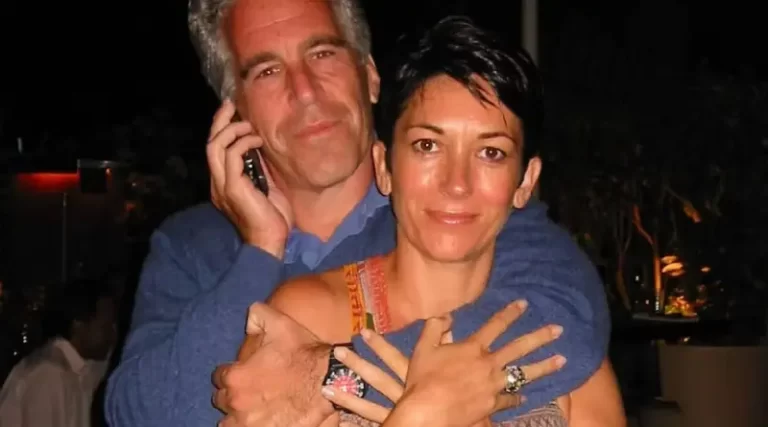

Convicted Epstein associate refuses to answer Congress while pushing for presidential clemency
Epstein documents reveal Maxwell seeking Trump pardon as political tensions intensify in Washington and renewed attention falls on one of the most controversial criminal cases in modern American history. Ghislaine Maxwell, the longtime associate and convicted accomplice of disgraced financier Jeffrey Epstein, has once again become the center of national debate after refusing to testify before Congress while simultaneously seeking a presidential pardon from Donald Trump.
Maxwell, who is currently serving a 20-year federal prison sentence, appeared via video link from a Texas prison during a closed-door hearing held by the US House Oversight and Government Reform Committee. Despite being called to provide information related to the Epstein investigation, Maxwell declined to answer all questions, invoking her constitutional right against self-incrimination under the Fifth Amendment.
Silence before Congress raises new questions
During the committee session, lawmakers attempted to question Maxwell about her role in Epstein’s trafficking network, the individuals who may have benefited from it, and the handling of evidence related to the case. However, Maxwell did not respond to a single question.
According to committee officials, her refusal to testify was expected, but the reasoning behind her silence has sparked outrage across party lines. Maxwell stated that she chose not to speak because doing so could potentially expose her to further legal risk, even as she continues to appeal her conviction.
Republican Committee Chair James Comer later confirmed that Maxwell relied entirely on her constitutional rights throughout the hearing. “She made it clear that she would not answer questions without legal protection,” Comer said following the session.
Lawyers push Trump pardon as condition for cooperation
What has drawn the most criticism, however, is the position taken by Maxwell’s legal team. Her attorneys publicly stated that Maxwell would be willing to “tell everything” about the Epstein case if she were granted a presidential pardon by Donald Trump.
According to her lawyers, a pardon would allow Maxwell to speak freely without fear of additional prosecution. They claimed that under those circumstances, she would offer testimony that could “clear the names” of individuals whose reputations have been damaged by their association with Epstein, including Donald Trump and former President Bill Clinton.
The suggestion immediately ignited backlash among lawmakers, who accused Maxwell of attempting to trade testimony for personal freedom. Several members described the proposal as coercive, unethical, and deeply troubling for the integrity of congressional investigations.
Lawmakers condemn what they call a manipulative strategy
Democratic members of the committee responded with particularly strong language. Virginia Representative James Walkinshaw referred to Maxwell as a central enabler of Epstein’s crimes and accused her of showing no remorse for the victims.
“Instead of accountability, what we witnessed was another chapter in a long-running campaign to escape justice,” Walkinshaw said. He called on Trump to explicitly reject any possibility of granting Maxwell a pardon.
Other lawmakers echoed those concerns, arguing that Maxwell’s silence is part of a broader strategy to pressure political leaders. Representative Suhas Subramanyam stated that Maxwell’s refusal to cooperate is directly linked to her hope for presidential clemency, adding that uncertainty around Trump’s position only strengthens her resolve to remain silent.
Representative Melanie Stansbury went further, claiming Maxwell was attempting to “send a message” through her silence and effectively trying to “purchase” a pardon by withholding information.
Trump pardon debate intensifies political divide
The controversy has quickly escalated into a broader political issue. Democratic lawmakers have urged Trump to publicly state that he will not pardon Maxwell, arguing that his failure to do so fuels suspicion and undermines trust in the justice system.
Trump has not made a definitive statement on the matter. In the past, he has denied wrongdoing related to Epstein and distanced himself from the financier. However, critics argue that silence on the pardon question keeps the issue alive and politically charged.
Legal experts note that while presidential pardons are constitutionally permitted, using them in situations involving testimony-for-clemency arrangements raises serious ethical concerns.
Epstein case continues to haunt American politics
Jeffrey Epstein’s case remains one of the most disturbing scandals in recent US history. Accused of sexually abusing dozens of underage girls and operating a global trafficking network, Epstein was arrested in 2019 and later found dead in his New York jail cell.
Although authorities ruled his death a suicide, widespread skepticism persists. The case triggered intense scrutiny of powerful individuals linked to Epstein, including politicians, royalty, celebrities, and business leaders.
Court documents released over the years have listed numerous high-profile names. However, the FBI and the US Department of Justice later stated they found no evidence of a secret “client list” and concluded that Epstein died by suicide, not as part of a cover-up.
Despite those findings, public interest in the case has never fully faded.
Maxwell maintains innocence and seeks to overturn conviction
Ghislaine Maxwell continues to insist that she was wrongfully convicted. Her legal team is pursuing appeals aimed at overturning her sentence, arguing that trial errors and legal inconsistencies affected the outcome.
Maxwell was convicted on charges related to the sexual exploitation and trafficking of minors and sentenced to 20 years in federal prison. She is currently serving that sentence in Texas.
Her refusal to testify before Congress, combined with her request for clemency, has further polarized public opinion. Victims’ advocates argue that allowing Maxwell to leverage information for personal gain would be a betrayal of justice.
A pivotal moment for accountability
As the Epstein documents reveal Maxwell seeking Trump pardon, the situation underscores a larger debate about accountability, power, and transparency in the US political system. Lawmakers continue to investigate the broader Epstein network, with additional witnesses expected to be called in the coming weeks.
Whether Maxwell will ever testify remains uncertain. Whether Trump will respond to the calls for clemency—or rejection—could shape public perception for years to come.
For now, the Epstein scandal remains unresolved, and its political and legal consequences continue to unfold.

0 Comments