James
James
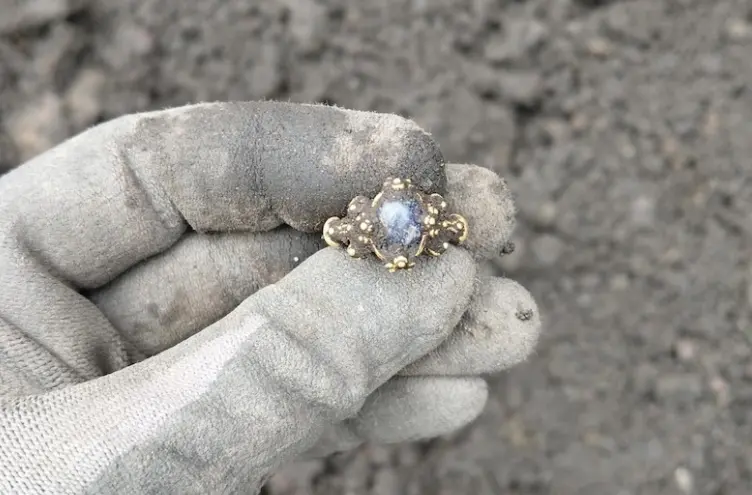
Medieval gold ring Norway has become the focus of international archaeological attention after an exceptionally crafted ring was uncovered in southern Norway. The discovery, made during excavations in the historic town of Tønsberg, offers a rare and intimate glimpse into women’s status, wealth, and beliefs during the early Middle Ages.
A Moment of Shock at the Excavation Site
The ring was found almost by accident. An archaeologist working at the site described the moment as surreal, saying she initially wondered if someone was playing a joke on her. What emerged from the soil was a delicate gold ring set with a deep blue stone, shining even before it was fully cleaned.
The excavation was carried out by the Norwegian Institute for Cultural Heritage Research (NIKU) in the heart of Tønsberg, widely regarded as Norway’s oldest city. Archaeologists have been uncovering remains of medieval houses, streets, and daily life structures dating back to the 9th century.
An Object Fit for a High-Status Woman
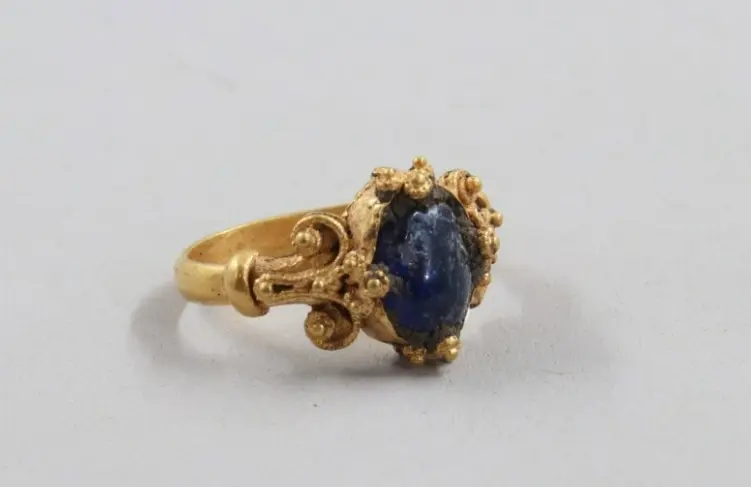
The medieval gold ring features an oval, dark blue gemstone that researchers believe may be a sapphire. The stone is framed by fine gold wires shaped into intricate spiral patterns, with tiny gold granules soldered on as decoration. This level of craftsmanship strongly suggests the ring belonged to a woman of high social standing.
Based on its size, experts estimate the ring would have fit a finger circumference of around 50 to 55 millimeters, supporting the idea that it was worn by a woman rather than used as a ceremonial object.
Byzantine Influence in Scandinavia
According to specialists from the University of Oslo, the decorative style of the ring points to a production date between the 9th and 11th centuries. The combination of spiral forms and gold granulation reflects techniques that originated in the Byzantine Empire and later spread to Scandinavia through trade and cultural exchange.
This makes the ring not only a personal ornament but also evidence of Norway’s early connections with the wider medieval world.
Symbolism Beyond Beauty
In the Middle Ages, rings were more than simple jewelry. They often symbolized wealth, power, and marital or social status. The blue stone on this ring may have carried spiritual meaning as well. Medieval beliefs held that blue sapphires represented divine power, helped protect chastity, and were even thought to cure illnesses such as boils and infections.
Whether the stone is a true sapphire or a carefully crafted glass imitation remains under investigation. Regardless, its symbolic value would have been significant at the time.
A Rare and Exceptional Find
NIKU officials emphasized the importance of the discovery, noting that the last time a gold ring was found in Tønsberg was over 15 years ago. Finds of this quality and preservation are extremely rare, making the ring a standout example of medieval Scandinavian craftsmanship.
As further analysis continues, the medieval gold ring from Norway promises to deepen our understanding of social hierarchy, trade networks, and belief systems in early medieval Scandinavia.
source: Live Science