James
James
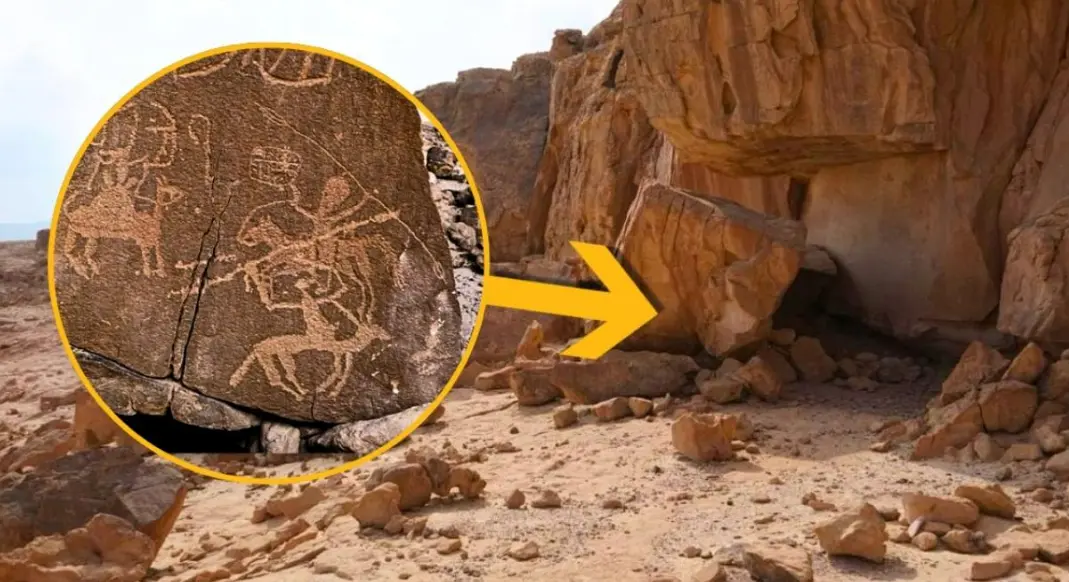
We are talking about a very interesting discovery here, paintings drawn on rocks, traces of very ancient civilizations.
10,000-year-old archaeological site in Egypt has been uncovered during recent excavations in the Sinai Peninsula, revealing a rare and continuous record of human activity stretching back more than ten millennia. The discovery, announced by Egypt’s authorities, is already being described by experts as one of the most important archaeological finds in the region in recent years.
The newly identified site is located on the Umm Irak Plateau in the Sinai Peninsula, a region long known as a crossroads between Africa and Asia. According to officials from the Egyptian Ministry of Tourism and Antiquities, the site spans nearly 100 meters and had not been documented in any previous archaeological records. What makes the discovery exceptional is the way traces from vastly different historical periods appear together on the same rock surfaces.
A Natural Rock Shelter Used for Thousands of Years
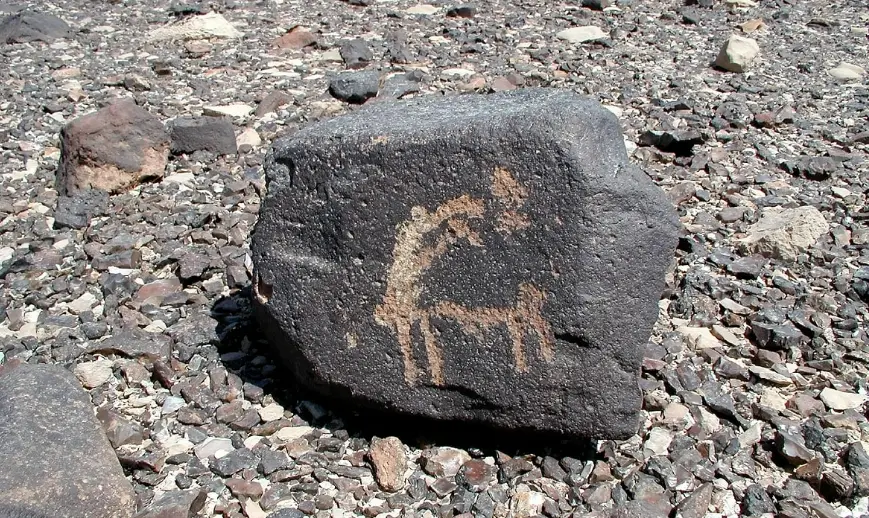
At the heart of the discovery is a large natural rock shelter that appears to have served as a place of refuge, expression, and daily life for human communities over thousands of years. On the ceiling and walls of the shelter, archaeologists identified red-pigment animal figures and abstract symbols dating back to prehistoric times. These early images are believed to be among the oldest forms of symbolic expression in the region.
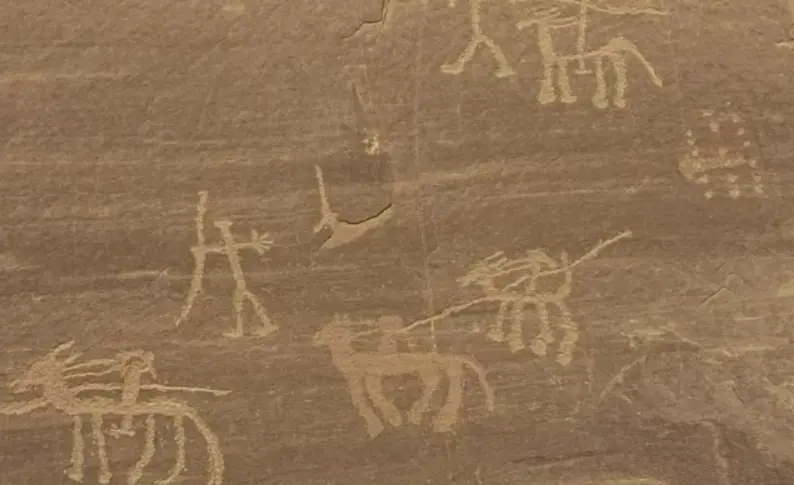
Remarkably, these ancient figures share the same surfaces with much later inscriptions written in Nabataean script and Arabic. The overlapping of prehistoric art with writings from classical and Islamic periods clearly shows that the shelter remained meaningful and accessible to different cultures across thousands of years.
Evidence of Daily Life, Not Just Ritual Use
The findings go beyond rock art and inscriptions. Inside the shelter, researchers uncovered the remains of ancient hearths and stone-built compartments. These features suggest that the site was not only used for ritual or artistic purposes but also functioned as a living space. Fires were lit, food was prepared, and people likely stayed there for extended periods.
Experts emphasize that this evidence supports the idea that the Sinai Peninsula played a strategic role throughout human history. As a natural land bridge connecting continents, Sinai served as a migration route, a temporary settlement zone, and a cultural meeting point for countless generations.
A Timeline of Human Expression in One Place
One of the most striking aspects of the 10,000-year-old archaeological site in Egypt is how it visually documents the evolution of human communication. From early symbolic drawings to structured writing systems, the site offers a rare, layered timeline of how humans expressed ideas, beliefs, and identities long before and after the invention of writing.
Archaeologists believe that future studies at the Umm Irak Plateau will provide valuable insights into prehistoric art, early symbolic language, and the transition from nomadic lifestyles to more settled forms of life.
“A Natural Open-Air Museum”
Officials and researchers alike have described the site as a “natural open-air museum.” Unlike enclosed archaeological sites, this discovery preserves human history exactly where it was created, exposed to the same landscape that ancient people once experienced.
Authorities stress that the discovery fills a major gap in Egypt’s archaeological map, particularly for the Sinai region, which has often been underrepresented compared to the Nile Valley. Detailed documentation, conservation efforts, and further excavations are expected to continue in the coming months.
As research progresses, the 10,000-year-old archaeological site in Egypt is expected to reshape current understanding of early human presence in Sinai and highlight the region’s long-standing importance in the story of human civilization.