James
James
Göbeklitepe ecstasy ritual is now at the center of a growing academic debate that challenges decades of traditional archaeological interpretation. For years, the monumental Neolithic sites of southeastern Anatolia—especially Göbeklitepe—have been understood through a familiar lens: massive T-shaped stone pillars, dramatic animal reliefs, and recurring phallic imagery were widely read as symbols of male dominance, fertility cults, or early hierarchical religious authority.
In short, the assumption was simple and rarely questioned:
Phallus equals power.
A new peer-reviewed study, however, asks archaeologists to pause and rethink that equation.
A Radical Reinterpretation From the Taş Tepeler Region
In a 2025 article published in the Cambridge Archaeological Journal, archaeologist Emre Deniz Yurttaş introduces a queer feminist analytical framework to the Neolithic Taş Tepeler region. The study, titled A Queer Feminist Perspective on the Early Neolithic Urfa Region, suggests that phallic imagery at sites such as Göbeklitepe, Sayburç, Karahantepe, and Nevalı Çori may not represent masculinity or domination at all.
Instead, the research proposes that these images functioned as ritual action tools, possibly linked to altered states of consciousness—what the study describes as ecstatic experience.
Importantly, the term “queer” here does not refer to modern identities. It is used as an analytical method to unsettle modern assumptions about bodies, sex, and meaning—especially the tendency to interpret ancient imagery solely through reproduction or social hierarchy.
Why Sayburç Changes the Conversation
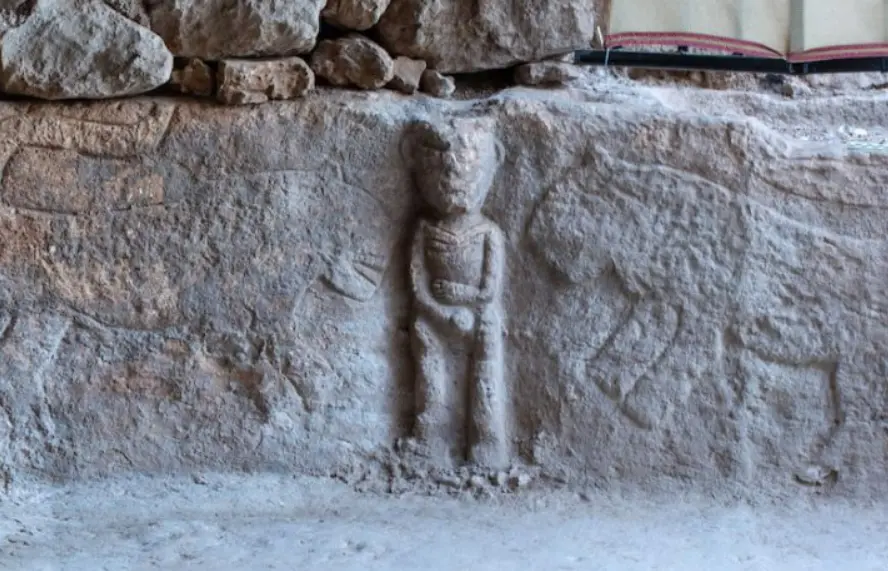
The clearest challenge to older interpretations comes from a relief discovered at Sayburç.
The carving depicts a seated human figure flanked by animals. The figure is holding an erect phallus. The scene is explicit, direct, and action-oriented. It is neither abstract nor symbolic in the conventional sense.
Earlier scholarship often softened such imagery, reframing it as a vague emblem of power or authority over nature. But the Sayburç relief resists that simplification.
The key question shifts from:
“Whose body is this?”
to:
“What is this body doing?”
Across the Taş Tepeler sites, phallic depictions are consistently shown in an aroused state, yet there are no scenes of penetration, reproduction, or sexual domination. This absence is striking—and likely meaningful.
Ecstasy as Ritual Technology
Anthropological research from many traditional societies shows that trance and altered perception are often achieved through bodily techniques: rhythmic movement, repetitive sound, intoxication, and sometimes sexual stimulation.
Within this framework, arousal is not taboo—it is functional. It becomes a means of crossing perceptual thresholds.
Yurttaş argues that the Taş Tepeler communities operated within an animistic worldview, where boundaries between human, animal, and object were fluid rather than fixed. The exaggerated and hybrid animal carvings throughout the region support this interpretation.
If the goal was not power, then perhaps it was boundary-crossing—reaching a state of heightened bodily intensity that allowed participants to access different modes of perception.
Were the Stones Active Participants?
Another striking aspect of the study concerns the role of stone itself.
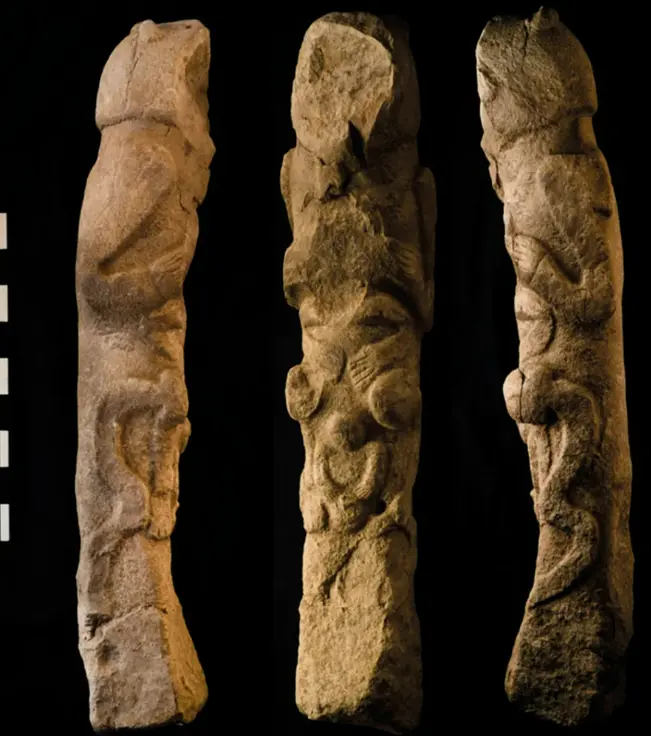
Were the massive pillars of Göbeklitepe merely symbolic markers? Or were they considered active participants in ritual life?
Ethnographic parallels suggest that in some cultures, objects are understood as agents capable of storing, transmitting, or amplifying spiritual force. Seen this way, phallic imagery may not only activate the human body, but also the stone—turning architecture into a kind of ritual technology.
This interpretation weakens the idea that ritual power belonged exclusively to a specific gender or elite group.
Where Is the Evidence for Hierarchy?
So far, the Taş Tepeler region has produced no clear evidence of elite burials, wealth accumulation, or rigid social stratification. Most researchers describe these communities as relatively egalitarian.
If strong hierarchies were absent, reading the phallus as a symbol of male domination becomes increasingly difficult to justify.
The Göbeklitepe ecstasy ritual hypothesis instead places ecstatic experience—not authority—at the center of ritual life.
Why This Matters
This research does not project modern identities onto the past. Rather, it exposes how modern assumptions shape archaeological interpretation.
Göbeklitepe is often labeled “the world’s first temple.” But it may also represent something more experimental: a space where early humans explored the limits of body, perception, and ritual intensity.
The Taş Tepeler sites suggest that Neolithic people were not only focused on survival—they were also deeply invested in transforming experience itself.
Power?
Or ecstasy?
The debate has only just begun.