James
James
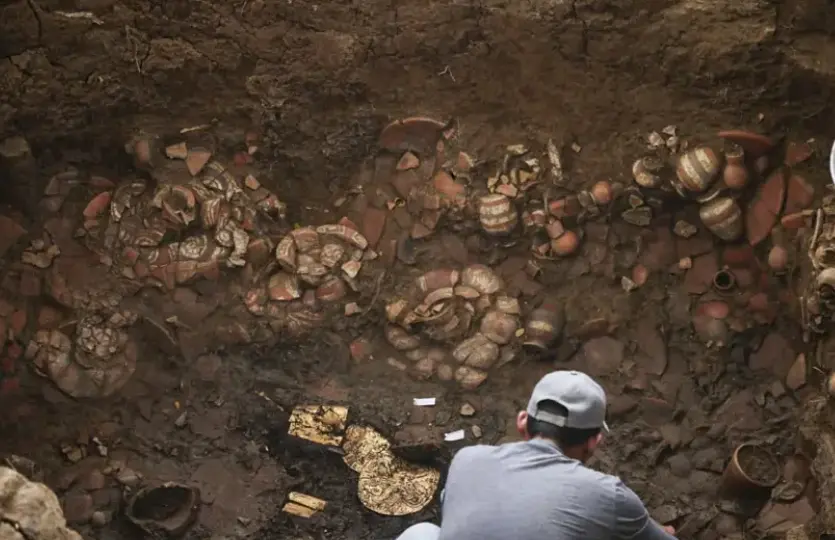
Gold-filled ancient tomb discoveries are rare, but archaeologists in Panama have uncovered an extraordinary burial that is shedding new light on pre-Columbian societies in Central America. The tomb, dated between 800 and 1000 C.E., contained human skeletal remains surrounded by gold jewelry and richly decorated ceramic vessels, suggesting the individual buried there held very high social status.
The discovery was announced on February 21, 2026, following excavations led by archaeologist Julia Mayo at the El Caño archaeological site, located near the town of Natá, approximately 200 kilometers southwest of Panama City.
A Thousand-Year-Old Tomb Emerges From the Soil
According to experts, the gold-filled ancient tomb dates back more than a thousand years, to a period long before Spanish colonization. The remains were found carefully placed and surrounded by valuable objects, indicating a ceremonial burial rather than an ordinary grave.
Julia Mayo, who leads the excavation team, confirmed that radiocarbon dating places the burial between the years 800 and 1000. This era corresponds to complex indigenous societies that lived in central Panama and developed advanced metalworking skills.
Skeleton Surrounded by Gold and Ceramics
The skeletal remains were found encircled by gold ornaments and ceramic containers decorated with traditional patterns. These ceramics are believed to have been used in rituals and daily life, and their presence in the grave highlights the importance of the deceased.
Mayo explained that individuals buried with gold jewelry were typically members of the highest social class. Gold was not only a symbol of wealth but also of spiritual power and leadership within these communities.
Bat and Crocodile Figures Hold Symbolic Meaning
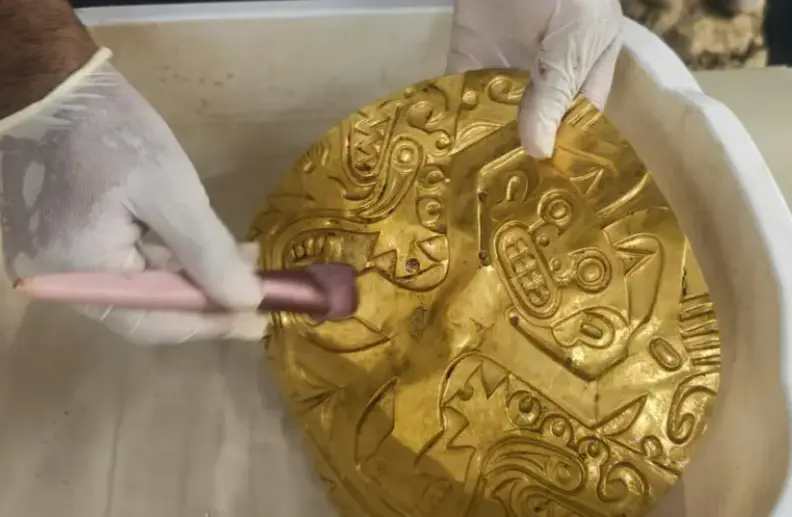
Among the gold items recovered were two bracelets, two earrings, and several chest ornaments featuring bat and crocodile figures. These animal symbols are especially significant in pre-Columbian belief systems.
In many ancient Central American cultures:
- Bats were associated with the underworld, death, and rebirth
- Crocodiles symbolized strength, fertility, and control over water
Experts believe these symbols may indicate the individual’s role as a leader, warrior, or spiritual figure.
El Caño: A Burial Center Used for Centuries
The El Caño archaeological site has long been known as an important ceremonial and burial area. Researchers say it was actively used between the 8th and 11th centuries by indigenous groups living in central Panama.
Julia Mayo stated that the site functioned as a burial center for approximately 200 years. Prior to this discovery, archaeologists had already uncovered nine similar tombs in the area, all believed to belong to elite individuals.
Each new tomb adds valuable information about how these societies organized power, wealth, and spiritual beliefs.
Death as a Transition, Not an End
Officials from Panama’s Ministry of Culture described the gold-filled ancient tomb as a discovery of “great importance” for understanding Panama’s archaeological heritage and the broader history of the Central American isthmus.
Anthropologists studying the site suggest that these societies viewed death not as an ending, but as a transition into another stage of existence. Social status, they believe, continued beyond death, which explains why elite individuals were buried with precious objects.
This belief system is reflected in the careful placement of gold, ceramics, and symbolic animal figures within the tomb.
Why This Discovery Matters
The tomb offers rare insight into:
- Pre-Columbian burial practices
- Social hierarchy in ancient Panama
- The spiritual meaning of gold and animal symbols
- Trade and craftsmanship in early Central America
Gold objects from this period were often crafted locally, showing a high level of metallurgical knowledge long before European contact.
Ongoing Research and Future Excavations
Archaeologists plan to continue excavations at El Caño and conduct further studies on the remains. Future research may include:
- DNA analysis to learn about ancestry
- Isotopic studies to understand diet and mobility
- Detailed examination of goldworking techniques
Experts hope these studies will help reconstruct the lives of the people who lived in the region more than a millennium ago.
A Window Into Panama’s Ancient Past
The gold-filled ancient tomb discovered at El Caño is more than just a collection of artifacts. It is a powerful reminder of the complexity, belief systems, and craftsmanship of societies that thrived in Panama long before modern borders existed.
As excavations continue, archaeologists believe many more secrets remain buried beneath the soil—waiting to tell the story of a forgotten world.