James
James
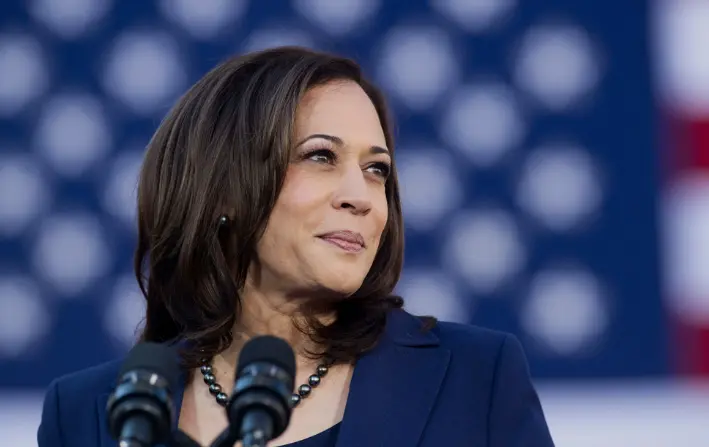
Former U.S. Vice President Kamala Harris has suggested she may re-enter the presidential race in 2028, following her defeat to Donald Trump in the 2024 election.
Appearing at the annual convention of the National Action Network in New York on April 10, 2026, Harris was asked directly about her political future. The question came from civil rights leader Al Sharpton, who pressed her on whether she would launch another presidential campaign.
Her response was cautious but notable.
“I might, I might. I’m thinking about it,” Harris told the audience, drawing strong reactions from supporters in attendance.
The moment quickly became one of the most talked-about highlights of the event, as chants encouraging her to run again echoed through the venue.
Reflecting on White House Experience
During her remarks, Harris emphasized her experience serving alongside Joe Biden from 2021 to 2025. She framed her time in office as preparation that gives her a deep understanding of presidential responsibilities.
“I know what the job is, and I know what it requires,” she said, referencing her proximity to key decision-making spaces such as the Oval Office and the Situation Room.
Harris described her role as “a heartbeat away” from the presidency, underscoring the seriousness of her previous position and the insight it provided into executive leadership.
Her comments appeared aimed at reinforcing her qualifications, should she decide to pursue another campaign.
A Historic but Challenging 2024 Campaign
Harris made history in 2024 as the first Black and South Asian woman to become the presidential nominee of a major U.S. political party. However, her path to the nomination was far from conventional.
At the time, President Biden faced mounting pressure after a difficult debate performance raised concerns about his age and ability to continue campaigning. In July 2024, he stepped aside and endorsed Harris as his successor.
Without participating in the traditional primary process, Harris secured the Democratic nomination through a party vote. This left her with only a few months to organize a national campaign against Trump, who was seeking a second, non-consecutive term.
Despite the compressed timeline, Harris managed to secure more than 75 million votes nationwide.
Election Results and Political Impact
The 2024 election ultimately ended in a decisive Electoral College victory for Trump, who secured 312 votes compared to Harris’s 226.
However, the popular vote told a much closer story. Trump received 49.8 percent of the vote, while Harris earned 48.3 percent—highlighting a deeply divided electorate.
Political analysts have since pointed to the unusual circumstances surrounding Harris’s candidacy as a key factor in the outcome. Limited campaign time, combined with internal party uncertainty, created significant challenges.
Still, her strong showing in the popular vote demonstrated considerable national support, positioning her as a potential contender in future elections.
Support and Criticism at Civil Rights Event
At the New York convention, Sharpton praised Harris’s resilience and career trajectory, describing her as someone who has consistently overcome skepticism.
He also suggested that voters underestimated the stakes of the 2024 election.
“We should have come out in greater numbers,” Sharpton told the audience, hinting at regret among some Democratic supporters.
He highlighted Harris’s vote total as evidence of her broad appeal, noting that she received more votes than several past Democratic presidents, including Barack Obama and Bill Clinton.
Growing Field of Potential 2028 Candidates
Harris was not the only prominent Democrat at the event, which featured several figures widely viewed as possible 2028 presidential contenders.
Among them were:
- J. B. Pritzker
- Josh Shapiro
- Pete Buttigieg
- Hakeem Jeffries
- Ayanna Pressley
Their presence underscored the early stage of what is expected to become a competitive Democratic primary field.
While no official campaigns have been launched, conversations about leadership and direction within the party are already intensifying.
Midterm Elections as a Political Test
Although the next presidential election is still two years away, the upcoming midterm elections are expected to serve as a critical barometer for both parties.
Republicans, led by Trump, are aiming to maintain control of Congress, while Democrats are working to regain ground. The results could shape the political landscape heading into 2028.
Harris used her speech to criticize the current administration, particularly its foreign policy approach.
She described recent U.S. military actions as a “war of choice” and warned that America’s global standing has weakened under Trump’s leadership.
“America has become more unreliable as a partner,” she said, adding that rebuilding trust with allies could take years.
Harris Keeps Options Open
Despite her comments, Harris stopped short of making any formal announcement about a 2028 campaign.
Instead, she framed her decision as part of a broader reflection on how best to serve the American public.
“I am thinking about it in the context of who can do the best job for the American people,” she said. “I’ll keep you posted.”
Her measured tone suggests that while a return to the campaign trail is possible, no final decision has been made.
What Comes Next?
As speculation continues, Harris remains one of the most recognizable figures in Democratic politics. Her experience, national profile, and historical candidacy make her a strong potential contender.
However, the path to 2028 is likely to be shaped by multiple factors, including party unity, voter priorities, and the outcome of the midterm elections.
For now, her remarks have reignited debate about the future of Democratic leadership—and whether Harris could once again take center stage.