James
James
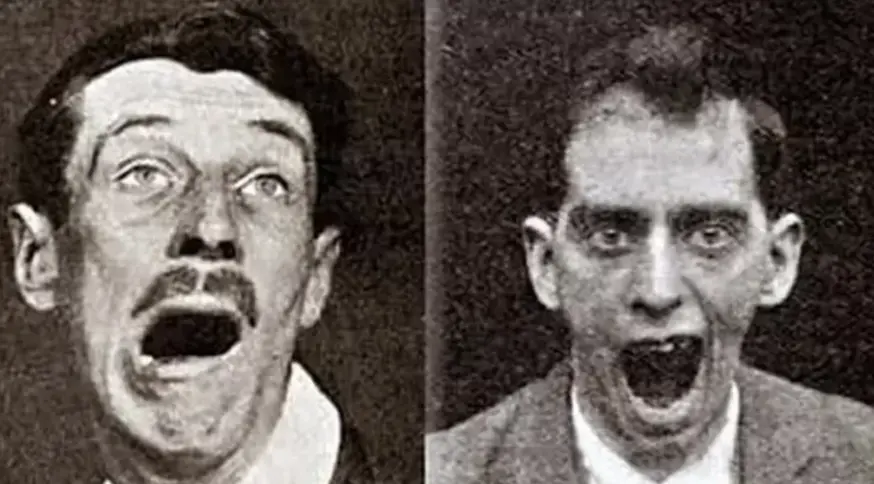
Encephalitis Lethargica remains one of the most disturbing medical mysteries in modern history. Emerging quietly during the chaos of World War I and the 1918 influenza pandemic, this strange neurological illness left hundreds of thousands dead and countless others trapped inside their own bodies—fully conscious, yet unable to move or speak.
Even more unsettling is how the disease disappeared. After terrorizing Europe and parts of the world for over a decade, Encephalitis Lethargica faded away almost as suddenly as it arrived. To this day, scientists are still unsure what caused it, how it spread, or why it stopped.
A Second Pandemic the World Barely Noticed
While the world was focused on the devastation of the Spanish flu, another silent epidemic was unfolding in hospitals across Europe. Patients began arriving with mild symptoms: headaches, low fever, nausea, and overwhelming fatigue. Doctors initially suspected common infections or complications of influenza.
But something was different.
Within days—or sometimes hours—patients would slip into a deep, unnatural sleep. Many could not be awakened. Others would wake briefly, fully aware of their surroundings, only to fall back into immobility. Families described their loved ones as “alive but unreachable.”
By 1916, the pattern had become impossible to ignore.
The Doctor Who Named the Nightmare
The condition was first formally described by Constantin von Economo, a neurologist at the University of Vienna. After observing dozens of unusual cases, he identified a new disease affecting the brain, particularly areas responsible for sleep, movement, and motivation.
He named it Encephalitis Lethargica, meaning “inflammation of the brain that causes lethargy.”
By the time von Economo published his findings, similar cases were being reported across Austria, France, Germany, the United Kingdom, and later North America. Hospitals quickly became overwhelmed with patients who appeared frozen in time.
From Flu-Like Symptoms to Living Statues
The early stages of Encephalitis Lethargica were deceptively mild. Many patients complained of:
- Headaches
- Slight fever
- Vomiting
- Fatigue
Then, without warning, the illness would escalate.
Patients experienced severe neurological symptoms, including muscle rigidity, paralysis, and profound sleep disorders. Some slept for days or weeks. Others entered a state resembling a coma while remaining mentally aware.
Doctors were horrified to discover that some patients could hear conversations around them but were unable to respond in any way.
Stories spread of young people collapsing in public places—on their way home from concerts or work—only to die within hours.
Why It Was Called the “Sleeping Sickness”
As cases increased, the public began calling Encephalitis Lethargica the “sleeping sickness.” However, it was unlike any known sleep disorder.
Some patients slept almost constantly. Others developed the opposite problem: extreme insomnia paired with mental confusion and hallucinations. Many never returned to normal consciousness.
Those who survived the acute phase were often left permanently changed.
The Disease Evolves Into Something Worse
By the early 1920s, Encephalitis Lethargica entered a new and more devastating phase. Survivors began developing a condition now known as post-encephalitic parkinsonism.
Patients became rigid, expressionless, and painfully slow-moving. They struggled with uncontrollable muscle spasms and chronic pain that even strong narcotics failed to relieve.
They sat motionless for hours, staring into space, neither fully alive nor truly gone.
Oliver Sacks and the “Human Zombies”
Decades later, in the 1960s, these patients caught the attention of legendary neurologist Oliver Sacks.
Working in long-term care hospitals, Sacks encountered individuals who had survived Encephalitis Lethargica but remained frozen for decades. He described them as:
“As passive as zombies, as insubstantial as ghosts.”
Though conscious, they showed no spontaneous movement, desire, or emotional response. Many had not spoken or moved voluntarily in years.
Sacks later documented their stories in his famous work Awakenings, bringing global attention to a forgotten medical tragedy.
Half a Million Deaths—and Then Silence
By conservative estimates, Encephalitis Lethargica caused the deaths of approximately 500,000 people worldwide. Many more survived with severe neurological damage.
Then, around 1927, the disease vanished.
No vaccine.
No cure.
No clear explanation.
New cases simply stopped appearing.
Was It Linked to the 1918 Flu?
For decades, scientists suspected a connection between Encephalitis Lethargica and the Spanish flu pandemic. The timing seemed too coincidental to ignore.
However, later studies revealed inconsistencies:
- Many EL patients had never contracted influenza
- Flu outbreaks continued after EL disappeared
- Geographic patterns did not fully align
Eventually, most researchers concluded that the two pandemics were likely independent, though the flu may have weakened immune systems and worsened outcomes.
What Caused Encephalitis Lethargica?
Despite a century of research, the exact cause remains unknown.
Theories include:
- A now-extinct virus
- An autoimmune reaction triggered by infection
- A polio-like pathogen
- Environmental or bacterial factors
None have been conclusively proven.
Modern brain tissue analysis has yielded few answers, largely because diagnostic technology did not exist at the time to preserve samples properly.
Could It Ever Return?
This is the question that still unsettles medical experts.
Some neurologists believe Encephalitis Lethargica was caused by a unique pathogen that no longer exists. Others warn that similar conditions could reappear under the right circumstances.
Cases resembling EL have been reported sporadically over the decades, but none have matched the scale or severity of the original outbreak.
For now, the disease remains a sleeping giant—documented in medical textbooks, but poorly understood.
A Forgotten Warning From Medical History
Encephalitis Lethargica serves as a chilling reminder of how little we sometimes understand about the human brain and infectious disease.
It arrived without warning.
It changed hundreds of thousands of lives.
And then it disappeared—leaving behind unanswered questions.
As modern medicine faces new neurological and viral threats, this century-old mystery continues to haunt researchers, quietly asking whether humanity is truly prepared for the next unknown illness.