James
James
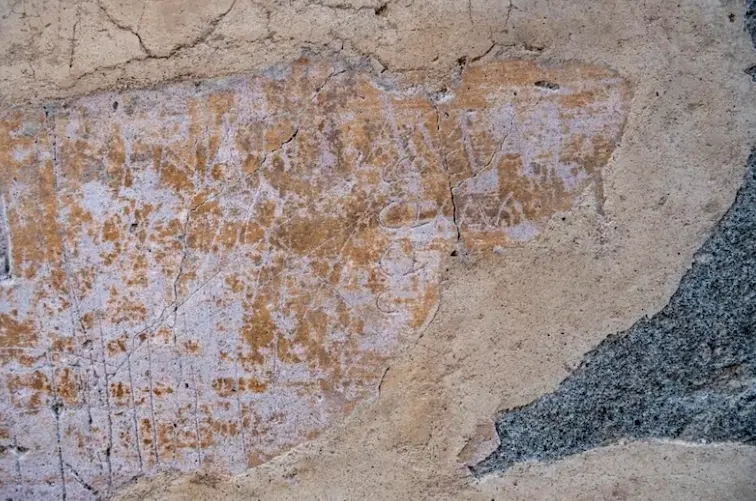
Pompeii love graffiti newly uncovered on a wall in the ancient city is offering rare insight into the private emotions, humor, and daily life of people who lived nearly 2,000 years ago. Using advanced imaging technology, archaeologists have revealed dozens of previously invisible inscriptions, including a simple yet powerful declaration of love carved by a woman named Erato shortly before Pompeii was buried by volcanic ash.
The discovery adds fresh depth to our understanding of Roman urban life, showing how ordinary people used public walls to express affection, opinions, jokes, and even political commentary.
A love message hidden for centuries
Roughly two millennia ago, a woman named Erato walked through a long corridor in Pompeii’s theater district. The passage was already covered with scratched messages left by passersby. At some point, she decided to add her own words.
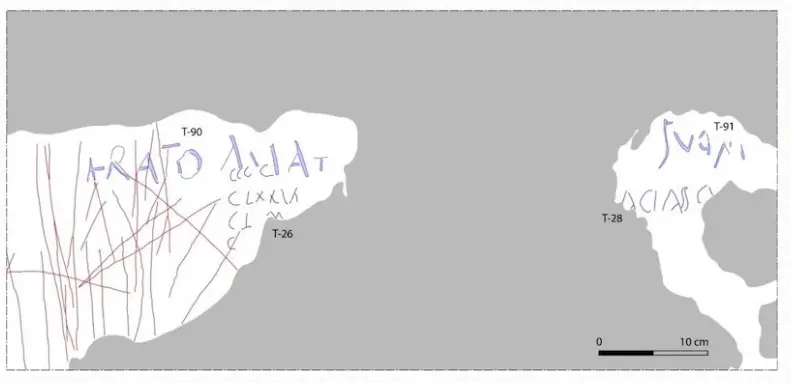
She carved a short phrase into the plastered wall: “Erato amat”, meaning “Erato loves.”
The final part of the message—likely the name of the person she loved—has not survived.
This modest inscription, recently identified using modern technology, is one of around 300 known graffiti texts carved into the same wall. It survived only because Pompeii itself was frozen in time when Mount Vesuvius erupted in AD 79, burying the city under volcanic ash and preserving buildings, streets, and walls in remarkable detail.
Rediscovering invisible writing
Archaeologists have been excavating Pompeii since the 18th century. The wall where Erato’s message appears was first uncovered in 1794, and scholars documented about 200 inscriptions over the following centuries. However, many more carvings were simply too faded to be seen with the naked eye.
That changed with the use of Reflectance Transformation Imaging (RTI), a technique that combines dozens of photographs taken under different lighting conditions. By analyzing how light interacts with the wall’s surface, researchers can reveal shallow scratches and carvings that are otherwise invisible.
Using RTI, scientists identified 79 previously unknown graffiti fragments on the wall, including Erato’s love note.
Everyday voices from ancient Pompeii
Researchers say these inscriptions are valuable precisely because they are informal. Unlike official inscriptions or literary texts, wall graffiti reflects the voices of ordinary people—many of whom are rarely represented in ancient historical records.
“These texts highlight urban communication from segments of the population that usually remain invisible in formal sources,” explains historian Marie-Adeline Le Guennec of Université du Québec. “They also show how theaters functioned as social spaces in the Roman world, and they tell us about literacy, drawing skills, and everyday expression.”
The corridor itself was once about 27 meters long, linking two theaters in Pompeii. According to researchers, it was a place to walk, linger, talk, and socialize. Over time, visitors scratched messages along almost the entire length of the wall.
Love, jokes, and emotional confessions
Erato’s message fits naturally among other personal inscriptions found on the same surface. One nearby text reads:
“I’m in a hurry—take care, my Sava; make sure you love me!”
Another inscription reveals the feelings of Methe, an enslaved laborer, who wrote that she loved a man named Cresto and added a hopeful blessing:
“May Venus of Pompeii help them both, and may they always live in harmony.”
These messages show that graffiti in Pompeii was not just vandalism—it was a shared emotional space. People used walls to declare love, flirt, argue, and joke in ways that feel surprisingly modern.
Gladiators scratched into stone
Not all newly discovered graffiti is written text. Among the most striking finds are drawings of two armed gladiators, each roughly 10 centimeters tall.
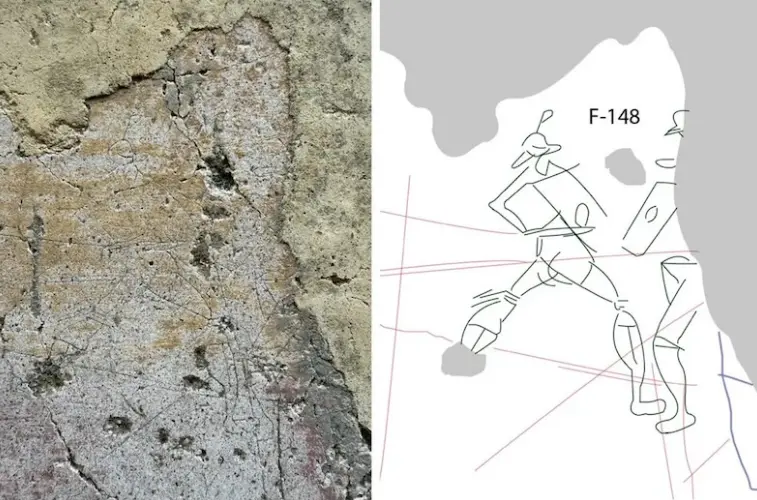
One figure leans backward, possibly showing a defensive move or deceptive maneuver. The second gladiator is partially preserved but appears to be holding similar weapons. Researchers suggest the dynamic pose reflects the experience of watching a live gladiator fight in an amphitheater.
Another drawing on the southern wall is especially intriguing. It depicts a helmeted gladiator carrying a shield, who may be female. While written records mention women gladiators only rarely, visual evidence is extremely scarce.
“If our interpretation is correct, this image could be one of the very few visual references to female gladiators in the Roman world,” Le Guennec notes.
Pompeii’s ancient message board
According to Gabriel Zuchtriegel, director of the Pompeii Archaeological Park, the wall functioned much like a public bulletin board.
“This place was a kind of noticeboard,” he says. “People left messages, dates, greetings, insults, drawings, and many other things.”
Across Pompeii as a whole, archaeologists have recorded more than 11,000 graffiti inscriptions, including:
- Political slogans
- Love declarations
- Sports-related messages
- Jokes and wordplay
- Short poems
- Insults and sarcastic remarks
One particularly famous inscription mocks the sheer volume of graffiti itself:
“I’m amazed, wall, that you haven’t collapsed under the weight of so many boring scribbles.”
Women’s voices on the walls
Although men appear to have carved graffiti more frequently than women, female voices are far from absent. Scholars point out that many messages were clearly written to be read by women, suggesting that female literacy was more common than once believed.
Classicist Rebecca Benefiel of Washington & Lee University notes that women sometimes replied directly to messages addressed to them, and a few even left longer, emotionally rich texts.
These interactions occasionally resemble modern online forums, where users respond to one another’s comments. Some scholars have even compared Pompeii’s walls to a physical version of social media, complete with humor, arguments, and inside jokes.
Preserving memory through technology
To make the newly identified inscriptions more accessible, researchers are developing an online platform called “Corridor Rumors.” The project combines RTI images with metadata and photogrammetry, allowing scholars and eventually the public to examine the graffiti in detail.
The tool is being developed by historians from Université du Québec and Sorbonne University and is expected to launch later this year.
Zuchtriegel emphasizes the importance of digital preservation:
“Technology is the key to shedding new light on the ancient world. Only through technology can the memory of lived life in Pompeii be secured for the future.”
Why this discovery matters
The newly revealed Pompeii love graffiti does more than add a few names to history. It restores individuality to people who lived, loved, joked, and argued nearly 2,000 years ago.
These fragile scratches remind us that ancient cities were not silent ruins but vibrant social spaces filled with emotion, creativity, and human connection. Thanks to modern imaging techniques, voices long thought lost are speaking once again.
Source: Smithsonian Magazine.