
Sumerians’ 4,000-Year-Old Technical Recipes reveal a story that connects the ancient world directly to the roads we drive on today. Long before laboratories, formulas, or engineering textbooks existed, Sumerian craftsmen in ancient Mesopotamia were already mastering material science through observation, experience, and experimentation. Recent archaeological and scientific studies now show that their methods for processing bitumen were not primitive or accidental. On the contrary, they followed precise and purposeful “technical recipes” that closely resemble the principles behind modern asphalt technology.
Sumerians’ 4,000-Year-Old Technical Recipes are not just a fascinating detail of ancient history. They help us understand how human knowledge develops over time and how many modern technologies are deeply rooted in ancient innovation. In this article, we will explore how the Sumerians used bitumen, why they modified it, and how their techniques mirror today’s asphalt engineering — all explained in clear, simple language.
Bitumen in the ancient Mesopotamian world
Bitumen is a naturally occurring hydrocarbon derived from petroleum. In ancient Mesopotamia, it was one of the most valuable raw materials available. The Sumerians used bitumen as an adhesive, a waterproofing agent, and a construction material. It sealed boats, protected baskets, strengthened tools, and insulated structures against water and decay.
However, Sumerian craftsmen quickly realized that pure bitumen had serious limitations. When used alone, it could become too sticky, soften excessively under heat, or grow brittle and crack over time. These weaknesses made it unsuitable for many long-term or heavy-duty applications.
Rather than abandoning the material, the Sumerians improved it.
Evidence from Abu Tbeirah
Modern researchers analyzed 59 bitumen-based samples recovered from the archaeological site of Abu Tbeirah, located in southern Iraq. This site was one of the key urban centers of the third millennium BCE. Using digital microscopy and machine-learning-assisted image analysis, scientists were able to examine the internal structure of the samples without damaging them.
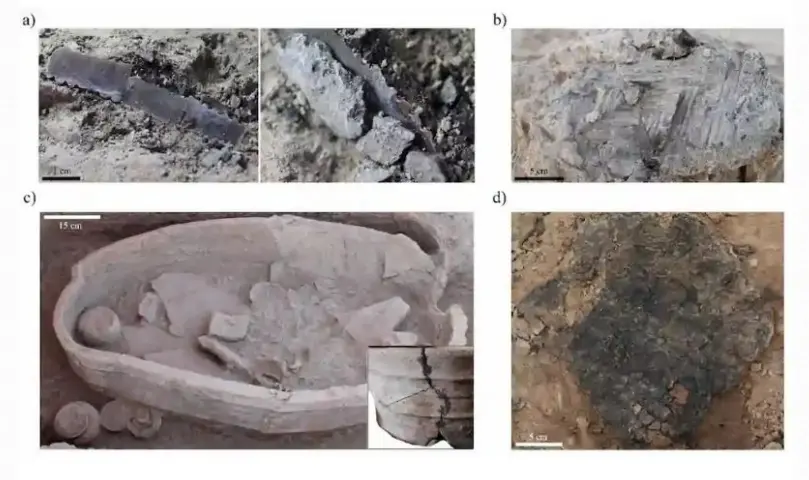
The results were remarkable. The bitumen objects were not uniform or randomly mixed. Instead, each sample showed carefully controlled proportions of additives, selected according to the object’s intended function. This confirms that Sumerians followed standardized material recipes — a concept strikingly similar to modern engineering practice.
The problem with pure bitumen
Pure bitumen has several technical drawbacks:
- It softens under high temperatures
- It can become brittle with age
- It may crack under mechanical stress
- It is sometimes too sticky for precise applications
The Sumerians observed these problems through long-term use. Instead of relying on trial and error each time, they developed repeatable solutions. These solutions formed the basis of what researchers now call Sumerians’ 4,000-Year-Old Technical Recipes.
Two key types of additives
To improve bitumen’s performance, Sumerian craftsmen consistently added two main categories of materials:
1. Organic additives
These included plant-based materials such as straw and reed fibers. When mixed into hot bitumen, these fibers acted as reinforcement elements. Much like modern fiber-reinforced composites, they increased flexibility, reduced cracking, and improved resistance to repeated stress.
2. Inorganic additives
Mineral powders, crushed stones, shell fragments, and fine sediments were added to adjust viscosity and durability. These materials made the bitumen more stable over time and less sensitive to temperature changes.
Together, these additives transformed bitumen into a versatile composite material.
Four main categories of bitumen-based objects
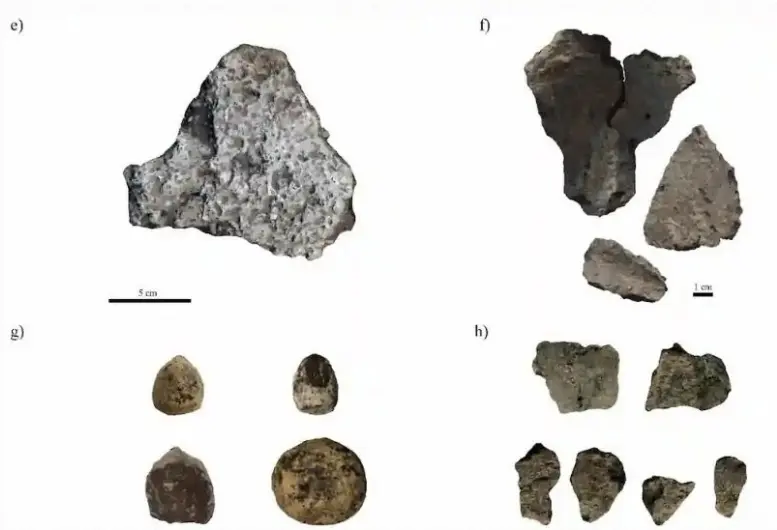
The study identified four distinct groups of bitumen composites, each linked to a specific use:
Adhesives for tools
Samples taken from flint sickles contained high amounts of organic fibers and very few mineral additives. This combination created a flexible adhesive that resisted cracking during repeated harvesting motions.
Trade ingots
These standardized blocks of bitumen showed a balanced mix of organic and inorganic materials. Researchers believe they were semi-finished products, transported and later remelted and adjusted depending on need.
Spherical reserves
Long considered mysterious, these mineral-rich, homogeneous spheres were likely storage units for surplus melted bitumen, shaped for later reuse.
Waterproofing materials
Samples from coffins and reed baskets displayed carefully balanced recipes that maximized both durability and water resistance, ideal for burial and storage purposes.
A clear link to modern asphalt technology
The most striking conclusion of the study is how closely these ancient practices resemble modern asphalt production. Today, engineers add plant fibers such as cellulose, jute, or hemp to asphalt mixes for reinforcement. Mineral fillers like limestone, cement, and ash are used to control flow, strength, and aging behavior.
In both ancient and modern contexts:
- Organic fibers improve flexibility and crack resistance
- Mineral additives regulate viscosity and long-term durability
- Material properties are tailored to specific functions
This shows that the core principles of material engineering have remained consistent for thousands of years.
Early material science without theory
What makes Sumerians’ 4,000-Year-Old Technical Recipes even more impressive is that they were developed without formal scientific theory. There were no equations, no microscopes, and no chemical models. Instead, knowledge was built through systematic observation, experimentation, and intergenerational learning.
Over centuries, Sumerian craftsmen refined their techniques, passing down recipes that worked and discarding those that did not. This practical, experience-based science allowed them to achieve results comparable to those reached by modern engineers using advanced tools.
An early example of circular economy
The research also reveals that bitumen was treated as a scarce and valuable resource. Adding straw and mineral dust did not only improve technical performance — it also extended the usable volume of bitumen. This allowed the Sumerians to make the most of a material that often had to be transported over long distances.
Evidence of reused and remelted bitumen suggests that recycling was common practice. Old bitumen objects were collected, reheated, and reinforced with additional fibers before being used again. This process mirrors modern recycling and sustainability strategies, showing that efficient resource management is far from a modern invention.
Why this discovery matters today
Understanding Sumerians’ 4,000-Year-Old Technical Recipes changes how we view ancient technology. It proves that sophisticated engineering does not require modern machines — it requires careful thinking, observation, and adaptation.
These findings also remind us that innovation is cumulative. Modern asphalt technology did not appear suddenly; it evolved from thousands of years of human experimentation. The roads beneath our feet today carry the legacy of ancient Mesopotamian craftsmen who solved the same material problems long before us.
A timeless lesson from the past
Sumerians’ 4,000-Year-Old Technical Recipes show that ancient knowledge can still inform modern science. By combining bitumen, plant fibers, and mineral additives, Sumerian craftsmen created durable, adaptable materials that met diverse needs. Their work anticipated the foundations of material science and engineering by millennia.
In the end, this discovery is not just about asphalt or archaeology. It is about human ingenuity — the ability to observe, learn, and build lasting solutions with the resources at hand. The Sumerians mastered this skill 4,000 years ago, and their legacy still shapes the modern world.
Leave a Reply