James
James
Rare dwarfism has been identified in the remains of a teenage girl who lived more than 12,000 years ago, according to a groundbreaking genetic study carried out on Stone Age skeletons discovered in southern Italy. The finding represents the oldest DNA-confirmed diagnosis of a genetic disease in an anatomically modern human, marking a major milestone for both archaeology and medical science.
A Stone Age Burial Reveals a Medical First
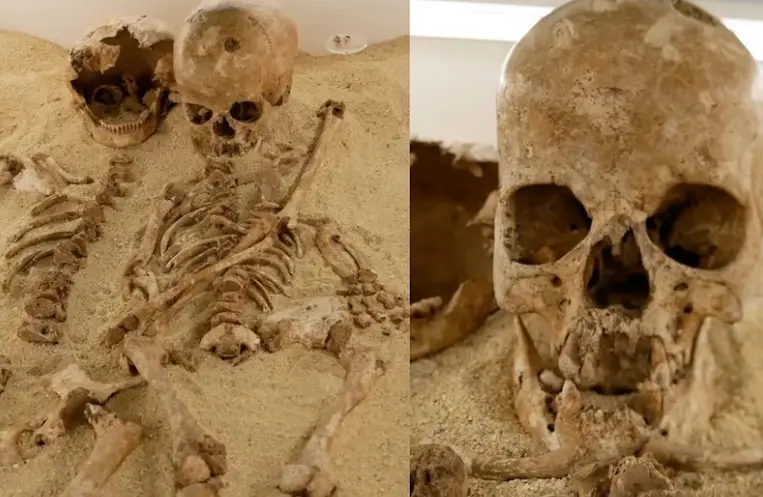
In 1963, archaeologists uncovered two human skeletons buried in a cave in southern Italy. The remains were found in a touching position, lying close together, suggesting a strong emotional or familial bond. For decades, the discovery intrigued researchers, but modern DNA analysis has now revealed remarkable new details about one of the individuals.
Genetic testing showed that one of the skeletons belonged to an adolescent girl affected by a rare form of dwarfism that significantly shortened her arms and legs. This diagnosis was made possible by identifying a single genetic mutation, preserved across thousands of years.
The Oldest DNA-Based Genetic Diagnosis
According to Dr. Adrian Daly, an endocrinologist and co-author of the study published in The New England Journal of Medicine, this discovery is unprecedented. It is not only the earliest confirmed genetic diagnosis using ancient DNA, but also the earliest known case of a rare inherited disease and the oldest documented example of a genetic condition passed within a family.
Identifying such a precise mutation in a person who lived over 12,000 years ago pushes the timeline of genetic diagnosis back by nearly 10,000 years.
A Rare Condition Called AMDM
The teenage girl, known as Romito 2, suffered from Maroteaux-type acromesomelic dysplasia (AMDM). This rare genetic disorder causes extreme shortening of the forearms, lower legs, hands, and feet. AMDM occurs when both copies of the NPR2 gene, which plays a crucial role in bone growth, carry mutations.
Researchers estimate Romito 2’s height was around 110 centimeters (3 feet 7 inches). Limited movement in her elbows and hands likely made daily tasks and long-distance movement difficult in a hunter-gatherer society.
Family Ties Preserved in DNA
DNA evidence also revealed that the second skeleton, known as Romito 1, was a woman closely related to Romito 2—most likely her mother or sister. Romito 1 was shorter than average for her time, standing about 145 centimeters, and carried one abnormal copy of the NPR2 gene. While this affected her height, it did not result in full dwarfism.
The presence of this genetic mutation in both individuals confirms an inherited condition rather than an isolated case.
Care and Compassion in Prehistoric Society
Despite her physical challenges, Romito 2 appears to have been well cared for. Analysis of her bones shows no signs of trauma or neglect, and her nutritional status was similar to others buried in the same cave. This strongly suggests that her community supported her throughout her life.
Researchers believe this care came from her close family group, highlighting an often-overlooked aspect of prehistoric societies: compassion and social responsibility.
A Window Into Ancient Human Life
Genetic analysis linked both individuals to the Villabruna genetic group, a population of hunter-gatherers that spread across southern, central, and western Europe after the last Ice Age. While no evidence of close-relative mating was found, the local population near the cave was likely small, increasing the chance of rare genetic traits appearing.
The cause of death for both individuals remains unknown, as no injuries or signs of violence were found.
Why This Discovery Matters
This extraordinary case shows that rare genetic conditions existed long before modern medicine—and that ancient humans recognized the value of caring for vulnerable members of their communities. The discovery bridges archaeology, genetics, and medical history, offering a deeply human story preserved in bone and DNA.