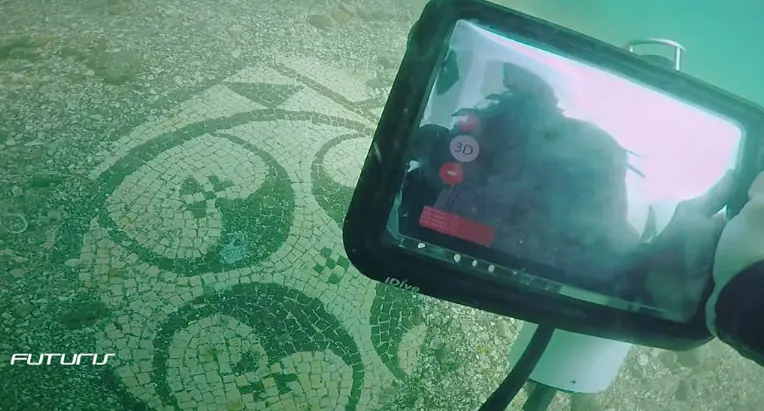
The climate crisis Europe underwater heritage is a growing concern for researchers and historians alike. Scientists warn that rising ocean acidification is not only damaging marine ecosystems but also putting invaluable submerged cultural and archaeological sites in Europe at risk. According to recent studies, some of these changes may become irreversible over the next decades and centuries.
Ocean Acidification Threatens Europe’s Submerged Treasures
A recent study coordinated by the University of Padova in Italy highlights how ocean acidification, a direct result of climate change, accelerates the deterioration of underwater archaeological sites. Materials that form the backbone of historical monuments—such as marble, limestone, and other calcium carbonate-rich stones—are particularly vulnerable when ocean pH levels decline.
Lead researcher Luigi Germinario explained that scientists studied how quickly historical materials erode in marine environments through both chemical dissolution and biological colonization. These findings were then combined with large-scale climate models to predict future degradation patterns.
The results are alarming. While stone deterioration was minimal before the industrial era and remains limited today, increasing emissions could trigger exponential rates of decay. Germinario emphasized to Italy’s La Repubblica that changes in material properties and the dynamics of biocolonization—where microorganisms settle and grow on underwater structures—could make these effects irreversible for decades and centuries.
Simulating Future Acidification Scenarios
To understand the real-world impact, researchers conducted underwater field experiments simulating future acidification scenarios. The team worked off the coast of Italy’s Ischia Island, where natural CO₂ “vents” create localized acidic conditions. These vents act as a living laboratory, helping scientists observe how extreme acidification could affect submerged heritage sites over time.
Panels containing samples of various stones commonly used in cultural heritage sites were submerged in areas around the vents. These panels experienced a wide range of pH levels and acidity conditions. Back in the lab, a high-resolution optical profilometer was used to create three-dimensional surface models, measuring dissolution and erosion at different pH levels. Germinario stated, “This allowed us to simulate what might happen to a stone artifact in a submerged archaeological site today and in the future.”
Europe’s Vulnerable Underwater Sites
Italy’s Baia Underwater Archaeology Park is one site potentially at risk from ocean acidification. The findings suggest that even minor surface degradation could represent irreversible loss of historical information. The most fragile artifacts are often highly porous or finely detailed, like intricate mosaics, carvings, and sculptures rich in calcium carbonate.
The study, published in Communications Earth & Environment, concludes that ocean acidification poses a significant challenge for the preservation of underwater cultural heritage. Urgent adaptation and conservation policies are now more critical than ever.
Germinario added, “Even seemingly minor surface damage can result in irreversible knowledge loss. Protecting Europe’s submerged past requires immediate attention to mitigate the effects of climate change on our oceans.”
Conclusion
The climate crisis Europe underwater heritage is no longer a distant threat. Rising ocean acidity is jeopardizing some of the most precious cultural and archaeological sites beneath Europe’s waters. From Baia Archaeology Park in Italy to ancient Roman ports along the Adriatic, the submerged treasures of Europe face a fragile and uncertain future. Immediate action is essential to ensure that this underwater legacy survives for generations to come.
Leave a Reply