James
James
Denizli Historic Discovery has brought new attention to the deep past of western Türkiye after a routine infrastructure project uncovered remarkable archaeological remains in the Çal district. What began as ordinary landscaping and leveling work has now turned into an important scientific finding that sheds light on Roman, Late Roman, and Byzantine life in the region.
An Unexpected Find During Infrastructure Works
The discovery took place in the Hüseyinler neighborhood of Çal, during environmental arrangement works carried out as part of the Çal Central Wastewater Treatment Plant project. While soil was being moved and leveled, workers encountered fragments that clearly did not belong to modern times. Archaeologists later confirmed the presence of grave remains, ceramic shards, large storage vessels known as pithoi, and broken roof tiles dating back centuries.
These findings immediately raised concerns about the historical importance of the area and prompted further investigation.
A Grave Stele Leads the Way
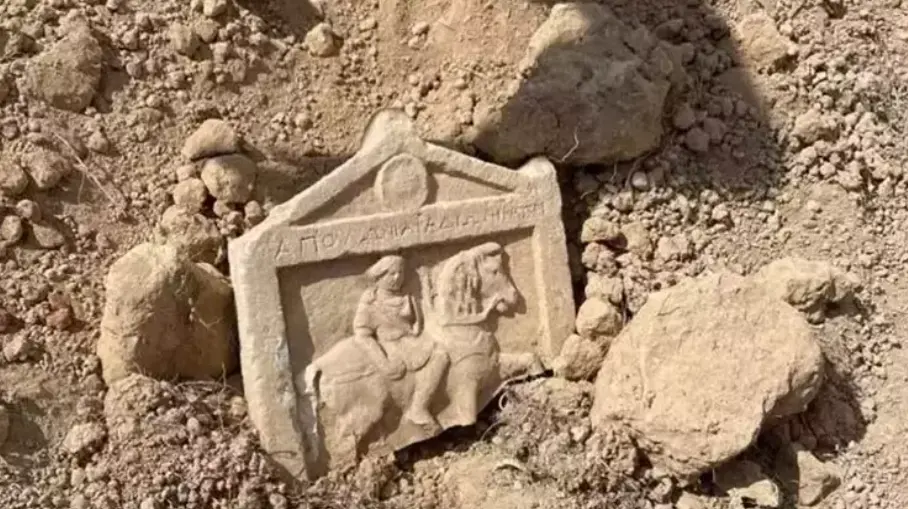
The story actually began around five months earlier, when a grave stele was discovered during landscaping activities. This stone artifact was transferred to the Hierapolis Archaeology Museum for protection and examination.
During this process, experts realized that the soil where the stele was found had been transported from another location. This crucial detail shifted attention to the source of the soil: several parcels of land in Hüseyinler neighborhood.
Surface Surveys Reveal Rich Archaeological Evidence
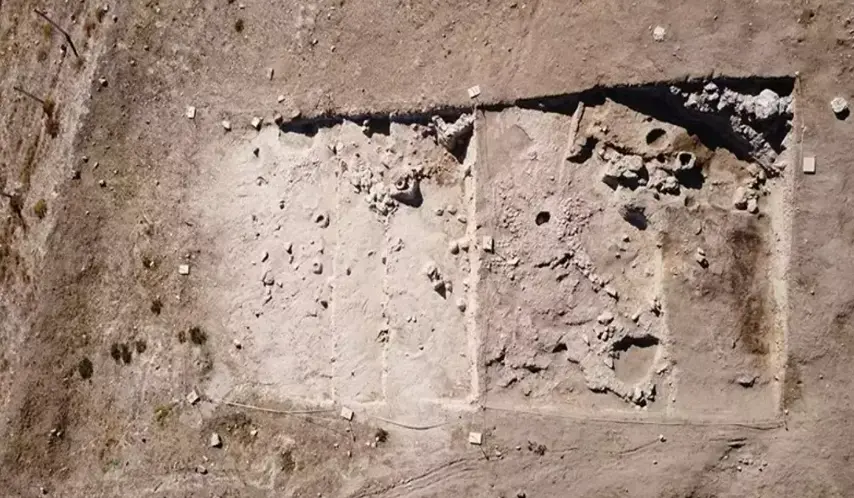
Detailed inspections were carried out on parcels numbered 105 and 107. On the surface alone, specialists identified numerous historical fragments, including ceramics from the Roman, Late Roman, and Byzantine periods. In some areas, traces of tile-covered graves were also observed, strengthening the idea that this zone once served as a necropolis, or ancient burial ground.
The density and variety of finds suggested that the area had been used continuously over long periods, making it an important archaeological landscape rather than an isolated discovery.
Official Registration as an Archaeological Site
After reviewing expert reports, museum analyses, opinions from the State Hydraulic Works (DSİ), and correspondence with relevant institutions, the Aydın Regional Council for the Protection of Cultural Heritage officially registered the area as an archaeological site.
The site was named Koru Bucağı Necropolis and classified as both a 1st-degree and 3rd-degree archaeological protected area. This decision ensures strict protection of the most sensitive zones while allowing controlled use in others under official supervision.
What Happens Next?
Authorities clarified that the already completed wastewater treatment plant project lies outside the protected site boundaries. However, from now on, any activity within the registered area will require formal approval from the heritage protection board.
In addition, alternative projects must be prepared to redirect canal and pipeline lines that currently pass through the protected zone. Land registry records will also be updated, with official notes stating whether a parcel lies partially or entirely within a 1st- or 3rd-degree archaeological site.
Protecting the Past While Planning the Future
This Denizli Historic Discovery shows how accidental finds can play a vital role in preserving cultural heritage. Thanks to timely intervention and expert evaluation, a previously unknown necropolis that illuminates Çal’s ancient past is now under legal protection.
From this point forward, agricultural and infrastructure activities in the area will be carried out with greater care and respect for history. What started as a simple landscaping effort has become a powerful reminder that Anatolia’s soil still holds countless stories waiting to be uncovered.