James
James
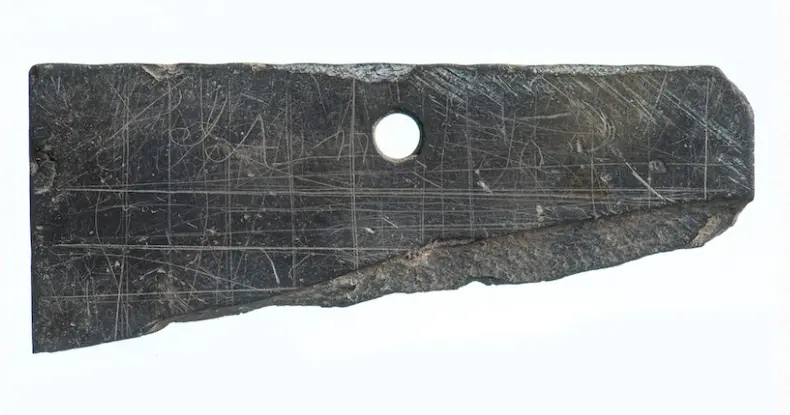
Victorian school slate discoveries rarely offer such a direct and human glimpse into the everyday lives of children, but a recent archaeological find in London has done exactly that. During construction work at a site in East London, archaeologists uncovered a fragment of a reusable writing tablet once used by schoolchildren in the Victorian era, alongside marbles and other small personal items linked to both learning and play.
A Rare Window Into Victorian Childhood
The discovery was made during preliminary excavations ahead of a major redevelopment project. Researchers found several glass and ceramic marbles, a pencil, and part of a slate tablet with letters still scratched onto its surface. According to experts from Museum of London Archaeology (MOLA), objects that can be directly linked to children are surprisingly rare in archaeology.
In an official statement, MOLA researchers said they were especially pleased to uncover evidence connected not only to schoolwork, but also to play. Together, these items paint a vivid picture of daily life for working-class children growing up in Victorian London.
Lost Marbles and Playground Games
Some of the marbles still retain traces of colorful decoration. Many appear to be “ceramic alleys,” smooth spherical marbles designed to resemble alabaster. These were found inside a covered, brick-lined drainage channel. Archaeologists believe this suggests the marbles were likely lost during playground games, possibly during school breaks, before rolling into the drain and being forgotten for over a century.
The Purpose of the Writing Slate
The slate tablet fragment is particularly significant. In the Victorian period, such slates were essential classroom tools. Children used chalk or stone pencils to copy letters from the blackboard or practice handwriting. Once a lesson ended, the slate could be wiped clean and reused for the next class, making it a practical and affordable alternative to paper.
Researchers are now attempting to date the objects more precisely and are studying the markings on the slate to see if the children’s writing can be interpreted.
A Site With a Long Social History
The excavation site, located in East London, will soon become part of the SEGRO Park Wapping industrial and logistics complex. However, centuries ago, the area served a very different purpose. Historical records show that it once housed a free school for poor boys, as well as almshouses for elderly residents with limited means.
These institutions were originally founded in 1536 by Nicholas Gibson, one of London’s elected sheriffs. After his death, his widow Avice Knyvet entrusted their care to the Worshipful Company of Coopers, a powerful trade guild known for barrel-making as well as charitable and educational work.
Community Life Beyond Stereotypes
Over time, the area developed into a tight-knit community closely tied to the cooper trade. Many residents had direct family connections to the profession. Records from the late 16th century describe funding for teachers, students, and elderly residents, offering insight into early social welfare systems in London.
Archaeologists also uncovered the remains of a chapel, terraced housing, wells, and brick-lined cesspits filled with everyday objects. Together, these finds represent what one senior archaeologist described as a “small microcosm of an entire community.”
From Roman London to the Victorian Era
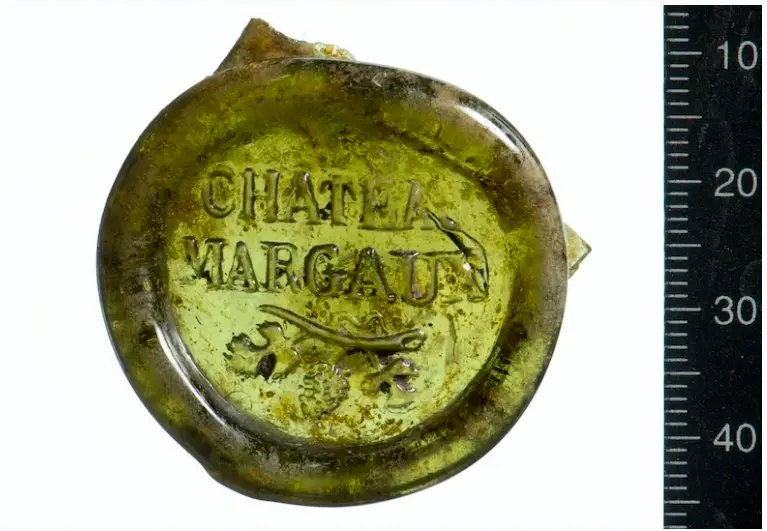
The site has yielded material spanning an extraordinary timeline, from Roman-occupied London (1st to 5th centuries) through to the Victorian era (1837–1901). Artifacts include fragments of glassware, ceramics, clay pipes, and even a seal from a wine bottle produced by the prestigious French winery Château Margaux.
This last discovery was unexpected, as the area—once nicknamed “Sailor Town”—was historically described as overcrowded and dangerous. According to archaeologists, finds like these challenge old assumptions and reveal a far more complex social landscape, where people from different backgrounds may have shared access to certain luxuries.
Rewriting the Story of Victorian London
The Victorian school slate and accompanying objects remind us that history is not only shaped by grand events, but also by ordinary moments: children learning to write, playing marbles during breaks, and living within vibrant, diverse communities. As post-excavation research continues, archaeologists hope to share even more details about the children who once held that slate in their hands.