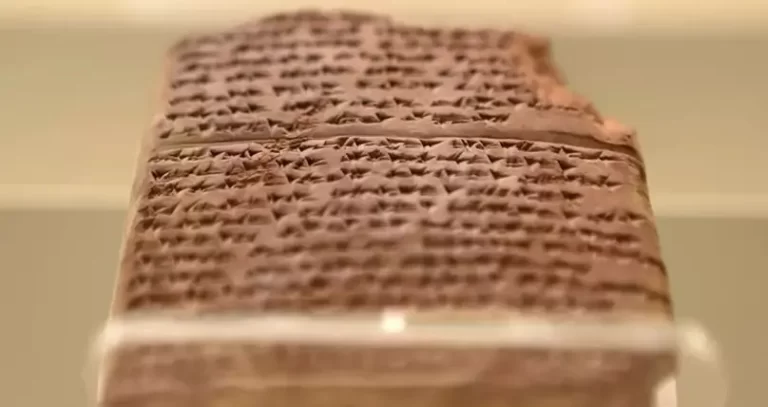

Kalasma Language Discovery is one of the most fascinating archaeological breakthroughs in recent years, revealing that an unknown language was once spoken in Anatolia—yet remained completely hidden from history until now. The discovery was made at Hattusa, the ancient capital of the powerful Hittite Empire, and is reshaping what we know about early civilizations in the region.
Discovery in the Heart of an Ancient Empire
The discovery emerged during ongoing excavations in Hattusa, a UNESCO World Heritage site that has been studied for over a century. Archaeologists have uncovered more than 30,000 clay tablets at the site, most written in Hittite using cuneiform script.
However, among these texts, researchers identified something unusual: a section written in a completely unknown language. This language, now called Kalasma, appeared embedded within a ritual text, suggesting it had a specific cultural or religious purpose.
The tablet itself dates back to the Late Bronze Age, roughly between 1550 and 1200 BCE, when the Hittite Empire dominated much of Anatolia and surrounding regions.
Who Were the Kalasma People?
The Kalasma language is believed to belong to a group known as the Kalasma people, who likely lived in northwestern Anatolia—around today’s Bolu region.
Although historical records mention the “land of Kalasma,” very little was known about its people or language—until now. The newly discovered text provides the first direct linguistic evidence of their existence, offering a rare glimpse into a forgotten community that lived under or alongside the Hittites.
A New Member of the Indo-European Family?
Early research suggests that the Kalasma language belongs to the Indo-European languages family—the same broad group that includes English, Turkish-influenced Anatolian languages of the past, and many European languages.
More specifically, experts believe it may be closely related to Luwian, one of the major languages spoken in the Hittite world.
If confirmed, this would make Kalasma one of the oldest recorded Indo-European languages ever discovered, adding a new branch to the already complex Anatolian language tree.
Why Was This Language Hidden for So Long?
One of the most intriguing aspects of the Kalasma Language Discovery is how it remained unknown despite decades of excavation.
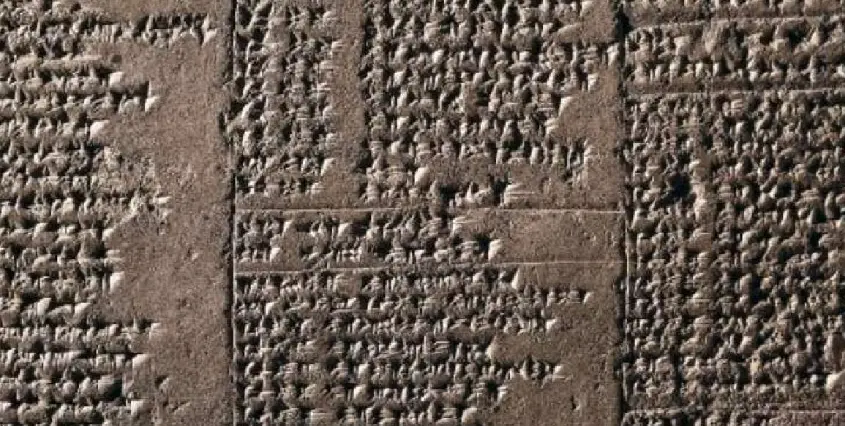
The answer lies in how Hittite texts were written. The Hittites often recorded foreign rituals and languages within their own texts. In this case, the Kalasma language appears only in a short passage within a larger Hittite ritual tablet.
Because of this, the language was essentially “hidden in plain sight” for centuries—buried within texts that scholars had already studied but not fully analyzed linguistically.
Religious Texts and Cultural Clues
The discovered text is believed to be part of a religious ritual, possibly involving chants or ceremonial recitations. This aligns with what we know about Hittite practices: they often preserved rituals from different cultures and performed them in their original languages.
This detail is crucial. It suggests that the Hittite Empire was not just politically powerful but also culturally inclusive, incorporating traditions from various peoples within its territory.
What Scientists Know So Far
Although the language has not been fully deciphered, researchers have already identified key characteristics:
- It is written in Hittite cuneiform script
- It likely belongs to the Anatolian branch of Indo-European languages
- It shares similarities with Luwian and other regional languages
- It appears in a ritual context rather than everyday communication
Despite limited material—possibly just a few lines—this is enough to confirm that Kalasma was a real, spoken language with its own structure and identity.
Why This Discovery Matters
The Kalasma Language Discovery is not just about finding a new language—it’s about redefining the history of Anatolia.
This single discovery proves that:
- Anatolia hosted far more languages than previously thought
- Many ancient cultures may still be undiscovered
- Even well-studied archaeological sites can still hold major surprises
It also highlights how incomplete our understanding of ancient civilizations still is. A language spoken thousands of years ago, in a region studied for over a century, remained unknown until just recently.
Anatolia: A Lost World of Languages
The discovery reinforces the idea that Anatolia was one of the world’s most important linguistic crossroads. Alongside Hittite, languages like Luwian and Palaic were already known—but Kalasma adds yet another layer to this complex cultural mosaic.
As excavations continue, experts believe more unknown languages or dialects could still be waiting to be discovered beneath the soil.
What Comes Next?
Researchers are now working to fully decode the Kalasma language. This involves:
- Comparing it with known Indo-European languages
- Analyzing grammar patterns
- Studying repeated symbols and structures
- Searching for additional tablets
Each new discovery could unlock more details about the people who spoke this language—how they lived, what they believed, and how they interacted with the Hittite world.

0 Comments