 James
James
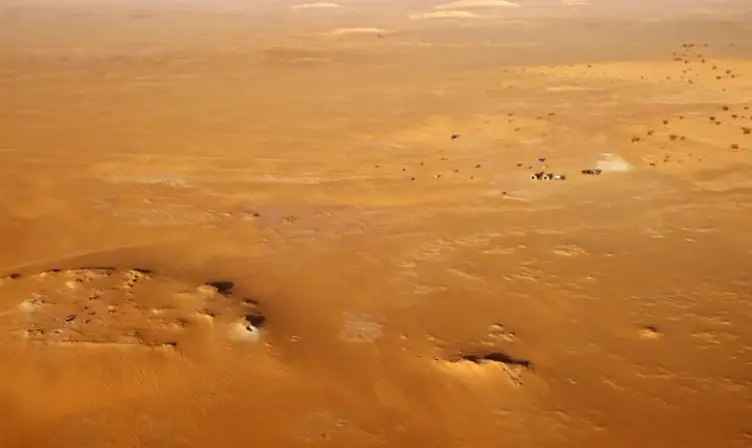
Prehistoric Sahara Cemetery Discovery has stunned archaeologists after nearly 200 human skeletons were uncovered deep within the vast sands of the Sahara Desert. The remarkable find sheds new light on a time when this now-hostile region was once a thriving and life-filled landscape.
A Hidden Burial Ground in the Desert
Far from any modern settlement, in a place where endless sand dominates the horizon, researchers uncovered one of the most extraordinary archaeological sites in Africa. The burial ground is located in the remote Ténéré Desert, often described as “a desert within a desert” due to its extreme conditions.
At the heart of this discovery lies Gobero, an ancient cemetery in modern-day Niger. Today, the area is one of the harshest environments on Earth, with temperatures reaching nearly 49°C, frequent sandstorms, and virtually no infrastructure.
Despite these dangers, scientists have been drawn to the region for decades—not only for its prehistoric secrets but also for its rich fossil deposits.
From Dinosaur Hunting to Human History
The discovery of the cemetery traces back to an expedition in 2000 led by Paul Sereno from the University of Chicago. Initially searching for dinosaur fossils, the team instead stumbled upon something even more surprising—human remains scattered across the desert surface.
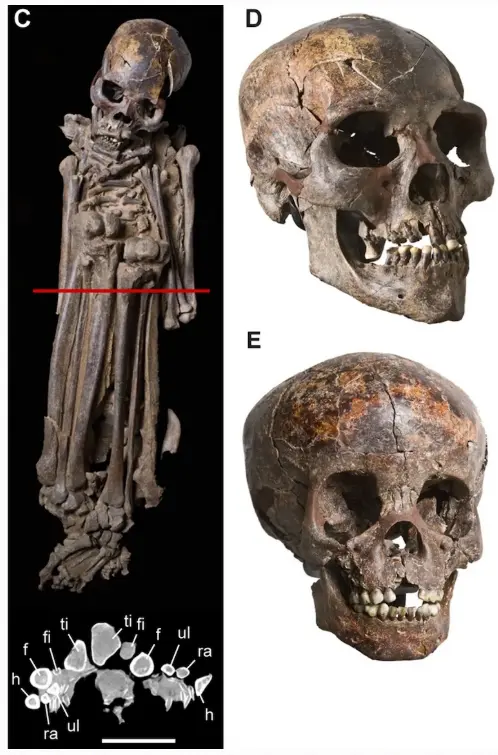
Alongside the skeletons, researchers found pottery fragments, beads, stone tools, and arrowheads, all pointing to a once-thriving human presence.
What began as a fossil-hunting mission quickly turned into one of the most significant prehistoric human discoveries in the Sahara.
Dating Back 10,000 Years
Further excavation revealed that the site contained approximately 200 skeletons, making it one of the oldest and largest known cemeteries in the region. Some of the remains date back as far as 8000 BCE.
The cemetery was not used for just a short period—it served as a burial ground for thousands of years, reflecting long-term human occupation in what is now an uninhabitable desert.
When the Sahara Was Green
The existence of such a cemetery in today’s harsh desert may seem impossible. However, scientists explain this by pointing to a period known as the Green Sahara.
Between roughly 15,000 and 5,000 years ago, the Sahara underwent dramatic climate changes. Increased rainfall transformed the region into a lush environment filled with lakes, vegetation, and wildlife such as hippos and crocodiles.
During this time, Gobero was located near a large freshwater lake, providing water, food, and a stable environment for human communities.
Two Distinct Ancient Cultures
One of the most fascinating aspects of the discovery is the presence of two very different human populations buried in the same location.
The earlier group, dating to around 7700 BCE, were hunter-fisher communities. They were physically robust and relied heavily on fishing and hunting for survival.
However, a major drought between 6200 and 5200 BCE forced them to abandon the area.
When wetter conditions returned, a second group settled in Gobero. These people had a more diverse lifestyle, including cattle herding, and were noticeably more slender in build.
Despite their differences, both groups chose to bury their dead in the same sacred ground—without disturbing earlier graves, a detail that continues to puzzle researchers.
A Mystery That Still Remains
According to researchers, the careful preservation of earlier burials suggests a level of respect or cultural continuity that is not yet fully understood.
How did these two biologically and culturally distinct groups share the same burial space without conflict or overlap? This question remains one of the biggest mysteries surrounding the site.
A Glimpse Into Humanity’s Past
The Prehistoric Sahara Cemetery Discovery offers a rare and valuable glimpse into how ancient humans adapted to changing environments. It also highlights how dramatically Earth’s climate can transform entire regions.
What is now one of the most inhospitable places on the planet was once home to thriving communities, rich ecosystems, and complex cultural practices.
More Secrets Beneath the Sand
The Sahara Desert is विशाल—roughly the size of the continental United States—and much of it remains unexplored. If a site as significant as Gobero could remain hidden for thousands of years and only be discovered by chance, it raises an exciting possibility:
There may be countless other archaeological treasures waiting beneath the الرمال.
For scientists, this discovery is likely just the beginning.


