James
James
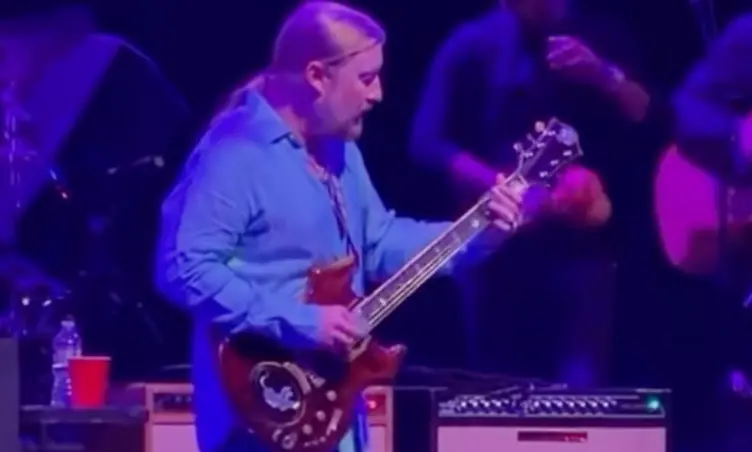
Derek Trucks plays Jerry Garcia Tiger guitar only one day after the legendary instrument sold for an astonishing $11.56 million at auction, creating one of the most talked-about moments in modern rock history. The historic performance took place at New York’s famous Beacon Theatre, where the guitarist surprised fans by bringing the iconic instrument on stage.
For decades, the guitar—nicknamed Tiger—was closely associated with Jerry Garcia, the legendary leader of Grateful Dead. Its sudden return to the spotlight immediately after a record-breaking sale shocked the Deadhead community and sparked excitement across the music world.
Many feared the guitar would disappear into a private collection after the auction. Instead, it was back on stage within 24 hours.
The Legendary Tiger Guitar
The famous instrument was originally built in 1979 by master guitar maker Doug Irwin. Known for its unique craftsmanship and artistic design, Tiger quickly became Garcia’s primary guitar during some of the most celebrated years of the Grateful Dead.
The guitar stands out for several distinctive features:
- A striking tiger-shaped inlay on the body
- Multiple layers of exotic wood
- Custom brass hardware
- Complex electronics designed for Garcia’s tone
Garcia first played Tiger live in 1979, and it remained one of his most recognizable instruments throughout the 1980s and early 1990s.
For fans of the Grateful Dead, the guitar represents more than just a musical tool—it symbolizes a significant chapter in rock history.
A Guitar Present at Historic Performances
During its time with Garcia, Tiger appeared in countless legendary concerts.
It was present during some of the band’s most memorable tours and performances, including major stadium shows and iconic festival appearances.
The instrument also has emotional significance for fans because it was used during the Grateful Dead’s final concert featuring Garcia. That historic performance took place in 1995 at Soldier Field.
Shortly afterward, Garcia passed away, bringing an end to an era that shaped the culture of live improvisational rock music.
The Auction That Shattered Expectations
On March 12, 2026, the guitar went up for auction at Christie’s in New York as part of the private collection of Jim Irsay, the Indianapolis Colts owner and well-known collector of historic music artifacts.
Before the auction, experts estimated Tiger might sell for between $1 million and $2 million.
However, the final result stunned observers.
After intense bidding, the guitar sold for $11.56 million, making it one of the most expensive guitars ever sold.
The winning bidder was Bobby Tseitlin, representing the instrument-focused company Family Guitars, which specializes in acquiring historically significant instruments.
The enormous price reflected the guitar’s cultural importance and its deep connection to Garcia’s legacy.
Derek Trucks Witnessed the Auction
Interestingly, acclaimed guitarist Derek Trucks was present during the auction.
Videos circulating online showed Trucks sitting beside the winning bidder during the event. Because of this, many initially believed that Trucks himself had purchased the guitar.
That turned out not to be the case.
Instead, Trucks was there to support the purchase and celebrate the instrument’s continued presence in live music.
The real surprise came the very next day.
Tiger Returns to the Stage
Just 24 hours after the auction concluded, Trucks appeared on stage at the Beacon Theatre with Tiger in his hands.
The performance took place during a residency by the Tedeschi Trucks Band, the Grammy-winning blues rock group led by Trucks and singer Susan Tedeschi.
The moment was electrifying for the audience.
Seeing Garcia’s famous guitar being played live again—rather than locked away in a private collection—was something few fans expected.
A Carefully Chosen Opening Song
Trucks opened the performance with “Statesboro Blues,” a classic blues song originally written by Blind Willie McTell.
The song choice carried historical symbolism.
Exactly 55 years earlier, the Allman Brothers Band famously opened their legendary Fillmore East concerts with the same song.
Those performances were later immortalized on the classic live album At Fillmore East, widely considered one of the greatest live rock recordings ever released.
By opening with the same song, Trucks connected multiple generations of American rock history in a single moment.
A Setlist Filled With Meaning
Throughout the show, Trucks continued to use Tiger during several songs.
Highlights included performances of:
- “Angel from Montgomery”, written by John Prine
- “Sugaree,” a beloved song written by Garcia and lyricist Robert Hunter
The performance created a bridge between musical eras—honoring Garcia’s legacy while allowing a new generation of audiences to hear the instrument again.
Toward the end of the first set, Trucks briefly teased the famous Grateful Dead song “Dark Star.”
The moment drew an emotional reaction from longtime Deadheads in the audience.
Why This Moment Is Important for Music History
The decision to play Tiger immediately after its record-breaking sale carries deep symbolic meaning.
Many collectors treat valuable instruments as museum pieces, preserving them behind glass where they can no longer be heard.
However, Family Guitars has expressed a very different philosophy.
The company describes its instruments as part of a “living collection.”
Rather than storing historic guitars away, the organization believes they should continue to be played and experienced in the way they were originally intended.
Allowing Derek Trucks to perform with Tiger only a day after its sale demonstrated that commitment in a powerful way.
A Living Legacy for Jerry Garcia
For fans of Jerry Garcia and the Grateful Dead, seeing Tiger played live again represented something far more meaningful than a rare concert moment.
It showed that the guitar’s story is still being written.
Instead of becoming a silent relic of the past, the instrument continues to produce music—just as Garcia once intended.
Moments like this help preserve the spirit of live improvisational rock music that Garcia helped define.
And for the thousands of fans who witnessed the performance at the Beacon Theatre, the sound of Tiger echoing through the venue was a reminder that musical history can still feel alive.