James
James
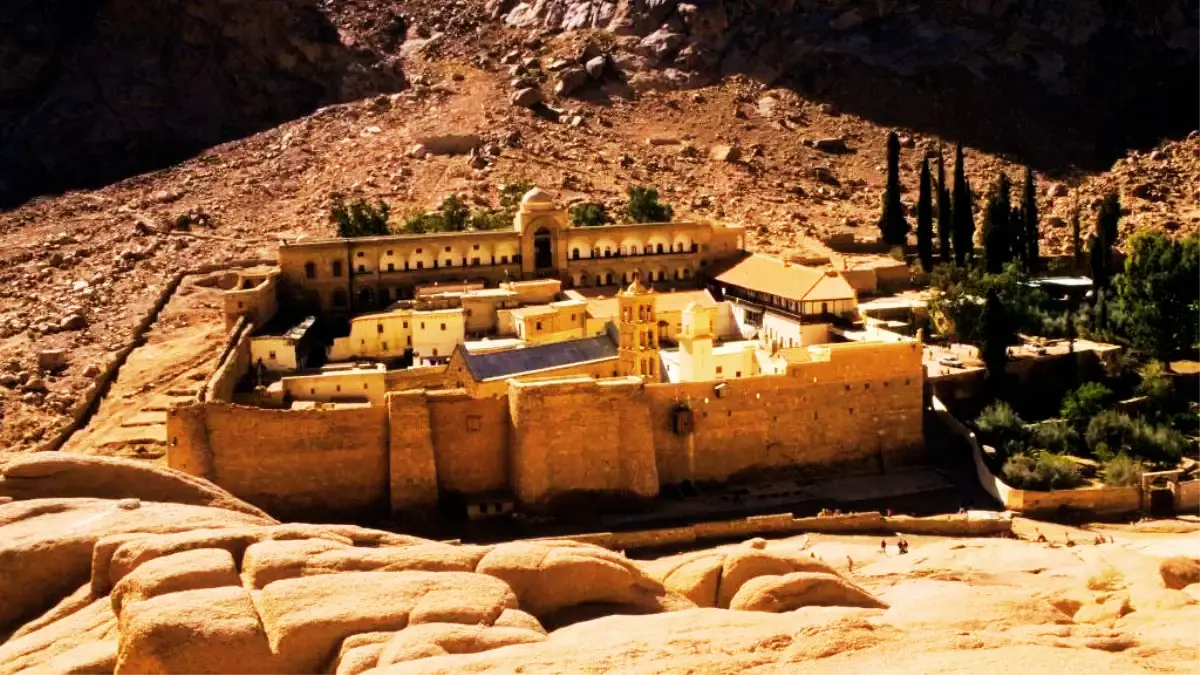
Mount Sinai, one of the most sacred sites in the world revered by Jews, Christians, and Muslims alike, is now at the center of a fierce global debate. The Egyptian government’s plans to transform the historic region into a luxury mega-resort are raising alarms among religious leaders, historians, and local Bedouin communities.
A Sacred Mountain Under Threat
Known in Arabic as Jebel Musa, Mount Sinai is traditionally regarded as the site where Prophet Moses received the Ten Commandments. For centuries, pilgrims and tourists alike have hiked the rocky paths at dawn, often guided by local Bedouins, to witness the breathtaking sunrise over the desert.
Nearby stands the Monastery of Saint Catherine, a 6th-century UNESCO World Heritage Site managed by the Greek Orthodox Church. This ancient monastery is home to invaluable manuscripts, including parts of the Codex Sinaiticus, one of the world’s oldest known Christian texts.
However, these deeply spiritual landmarks are now overshadowed by Egypt’s ambitious Grand Transformation Project, which includes luxury hotels, shopping malls, new roads, and even a cable car leading up the holy mountain.
The Grand Transformation Project
Launched in 2021, the project aims to revive Egypt’s tourism sector with promises of eco-lodges, visitor centers, and an expanded airport near Saint Catherine. Egyptian officials describe it as a “gift to the world and all religions”, portraying it as both a modernization effort and an economic lifeline for the country.
Sherif el-Sherbiny, Egypt’s Minister of Housing, insisted that the development would “protect the area’s environmental, visual, and cultural heritage while providing modern facilities for visitors.”
Yet, critics warn that the changes could irreversibly damage the spiritual character of Mount Sinai and erode the traditions of the Bedouin tribes who have lived there for centuries.
Local Bedouins Fear Displacement
The Bedouin communities, numbering around 4,000 in the region, have guided travelers, hosted visitors, and safeguarded oral traditions for generations. According to travel writer Ben Hoffler, who has long worked with Sinai tribes, the project is “not seen as development but as an imposition from above.”
“An urban world is being built around a nomadic heritage that never consented to this,” Hoffler told the BBC.
Many Bedouins worry that, just as they were sidelined in the development of Sharm El-Sheikh and other Red Sea resorts, they will once again be excluded from the economic benefits of tourism.
Religious and Diplomatic Tensions
The controversy has also strained relations between Egypt and Greece. In May 2025, an Egyptian court ruled that Saint Catherine’s Monastery stands on state-owned land, limiting the monastery’s rights to its immediate grounds. The Greek Orthodox Church strongly condemned the ruling.
Archbishop Ieronymos II of Athens declared:
“The monastery’s property is being confiscated. This spiritual beacon of Orthodoxy and Hellenism now faces an existential threat.”
Patriarchate officials emphasized that the monastery had been granted special protection since the time of Prophet Muhammad, highlighting its unique role as a symbol of coexistence between Christians and Muslims.
UNESCO and International Concerns
In 2023, UNESCO urged Egypt to halt construction and prepare a comprehensive conservation plan for the region. These warnings were ignored, and construction of hotels and infrastructure continued.
By mid-2025, the World Heritage Watch sent an open letter urging UNESCO to list Saint Catherine’s region as a World Heritage Site in Danger. Even King Charles III, patron of the Saint Catherine Foundation, expressed concern, calling the monastery “a great spiritual treasure that must be preserved for future generations.”
Economic Pressures Behind the Project
Egypt’s government argues that the transformation is necessary to revive tourism, a sector devastated by the COVID-19 pandemic, regional instability, and the ongoing conflict in Gaza. Authorities aim to attract 30 million visitors by 2028, positioning the Sinai project as a key element of this strategy.
Still, experts point out that economic growth must not come at the expense of heritage and faith. Critics see the project as part of a broader trend in Egypt, where rapid urbanization and large-scale developments often disregard local communities and cultural legacies.
Sacred History, Uncertain Future
For over 1,500 years, Saint Catherine’s Monastery has stood as a beacon of resilience, enduring wars, invasions, and political upheavals. Pilgrims still line up to see the site of the “Burning Bush” and walk the paths believed to have been traveled by Moses himself.
Yet, as cranes and bulldozers reshape the surrounding desert, many fear that Mount Sinai’s timeless spirituality is being commodified into a commercial tourist product.
The future of this sacred land now hangs in the balance: will it remain a sanctuary of faith and history, or will it become just another resort in Egypt’s expanding tourism portfolio?