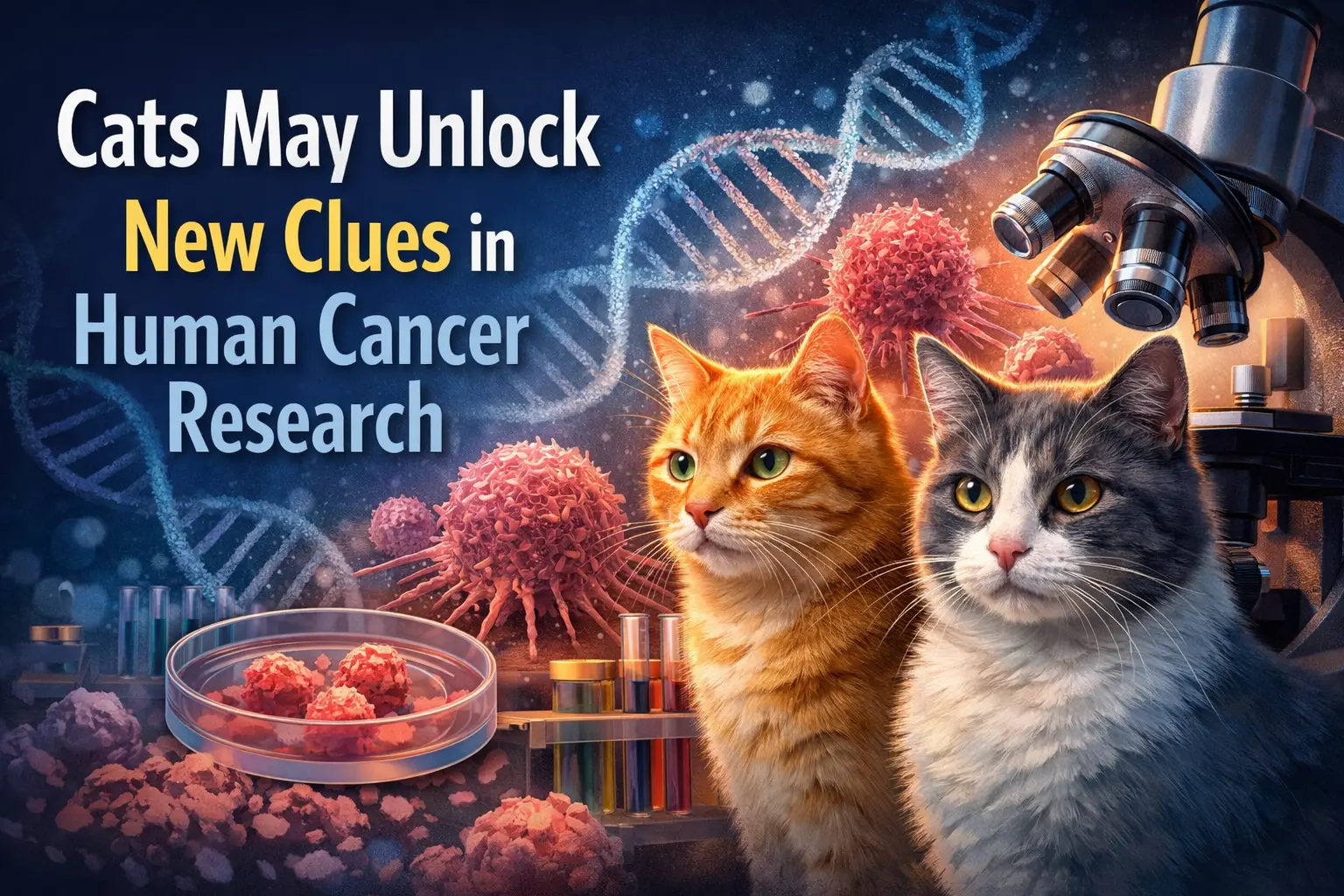
Cats and human cancer research are now more closely connected than ever before. A groundbreaking international study has mapped the genetic landscape of feline cancers, revealing striking similarities with tumor-driving mutations in humans and dogs. This discovery could reshape how scientists understand cancer biology and open new doors for treatments that benefit both pets and people.
A First-of-Its-Kind Genetic Map
For decades, the genetics of cat tumors remained largely unexplored. While cancer is one of the leading causes of illness and death in domestic cats, researchers had little insight into the genetic factors driving these diseases. That gap has now been filled thanks to a large-scale study published in Science, which provides the first comprehensive genetic analysis of feline cancers.
The project involved sequencing tumor samples from nearly 500 cats across five countries. By examining DNA mutations, scientists identified genetic changes that contribute to cancer development. The findings revealed that cats share many of the same cancer-driving genes as humans and dogs, making them valuable models for cross-species cancer research.
Shared Cancer Genes Across Species
One of the most striking discoveries was the role of the FBXW7 gene in feline mammary cancer. Mutations in this gene appeared in more than half of the cat tumors studied. In humans, FBXW7 mutations are linked to poor outcomes in breast cancer patients. This parallel suggests that cats could serve as powerful models for studying breast cancer biology and testing new therapies.
Beyond mammary tumors, researchers found genetic similarities in cancers affecting the blood, bone, lungs, skin, gastrointestinal system, and central nervous system. These overlaps highlight how cats, living in the same environments as their owners, may share not only genetic risks but also environmental factors that contribute to cancer.
Environmental Links Between Cats and Humans
Because cats share homes with humans, they are exposed to similar environmental risks—such as household chemicals, diet, and lifestyle factors—that may influence cancer development. This makes feline cancer research uniquely valuable for understanding how external factors contribute to cancer in both species.
Dr. Geoffrey Wood, a pathobiology professor at the University of Guelph and co-senior author of the study, emphasized the importance of this connection: “Despite domestic cats being common pets, there was very little known about the genetics of cancer in these animals—until now.”
Clues for Future Treatments
The study also explored how feline tumors respond to chemotherapy. Researchers discovered that certain drugs worked more effectively in cat mammary tumors with FBXW7 mutations. While these findings are preliminary, they suggest that cats could help identify which treatments are most effective for specific genetic profiles, paving the way for personalized medicine in both veterinary and human oncology.
Dr. Sven Rottenberg of the University of Bern, another co-senior author, noted that access to such a large dataset allowed researchers to test drug responses across tumor types in ways that were previously impossible.
Implications for Dogs and Other Animals
Interestingly, the research may also benefit canine cancer studies. Bailey Francis, co-first author at the Wellcome Sanger Institute, explained that knowledge gained from cats could inform cancer research in dogs, further strengthening the “One Medicine” approach that integrates veterinary and human medical research.
The One Medicine Approach
The concept of One Medicine encourages collaboration across species and disciplines. Treatments developed for humans may be tested in cats, while discoveries in feline oncology could guide human clinical trials. This reciprocal relationship ensures that progress in one field accelerates advancements in the other.
Dr. Louise Van Der Weyden of the Wellcome Sanger Institute highlighted the potential of this approach: “We can now begin to take the next steps towards precision feline oncology, to catch up with the diagnostic and therapeutic options available for dogs with cancer, and ultimately one day, humans.”
A Public Resource for Global Research
Beyond its immediate findings, the study created a publicly available genetic resource that other scientists can use to study feline cancers. This open-access database ensures that future research can build on these discoveries, fostering collaboration and accelerating progress in cancer biology.
Funding and Collaboration
The project was a global effort, involving institutions such as the Wellcome Sanger Institute, the University of Guelph’s Ontario Veterinary College, and the University of Bern. It was funded by organizations including the EveryCat Health Foundation, the CVS Group, Wellcome, the Natural Sciences and Engineering Research Council of Canada, and the Swiss National Science Foundation.
Why This Matters
Cancer remains one of the most challenging diseases to treat in both humans and animals. By uncovering genetic similarities across species, scientists can better understand how cancers develop, how they respond to treatment, and how environmental factors play a role. Cats, often overlooked in biomedical research, may now hold the key to breakthroughs that benefit millions of patients worldwide.
Looking Ahead
The study marks the beginning of a new era in feline oncology. Researchers hope to expand their work by exploring additional tumor types, testing new therapies, and integrating findings into clinical practice. For cat owners, this research offers hope that future treatments will improve the quality of life for their pets. For humans, it provides a reminder that medical progress often comes from unexpected sources—even from our feline companions.
Leave a Reply