 admin
admin
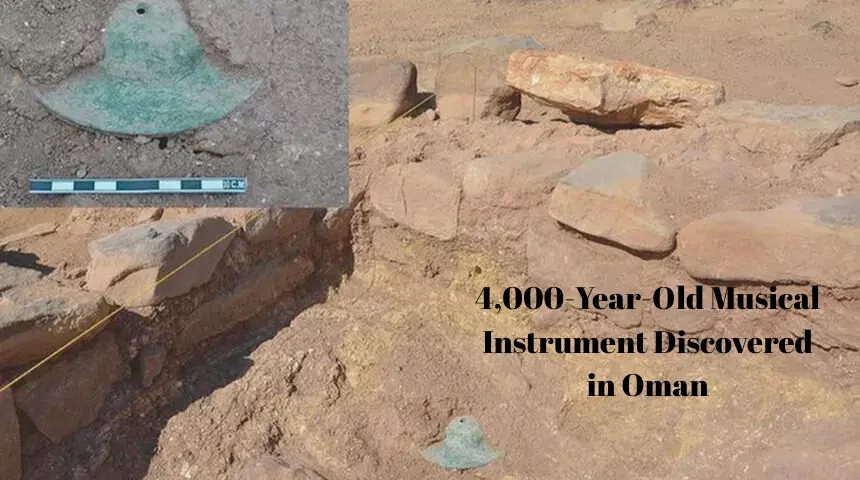
In the silent lands of southeastern Oman, an archaeological excavation has uncovered a sound from the depths of history. Buried in the Dahwa region, two seemingly ordinary bronze discs were identified as parts of a rare musical instrument dating back approximately 4,000 years. This remarkable discovery provides new insights into ancient ritual life and cultural exchanges in the Bronze Age.
The Discovery
At first glance, these objects appeared as simple metal rings. However, upon closer examination, researchers realized they are components of an extraordinary musical instrument: a pair of thin bronze bells, each with a small central hole. With a diameter of 138 mm, these bells were likely used in ceremonial rituals. Remarkably, their almost pristine preservation suggests they were carefully stored and valued in their time.
“These bells are not just artifacts; they are echoes of a musical tradition that resonated thousands of years ago,” said the lead archaeologist.
Technological Mastery and Cultural Exchange
The bells’ intricate design indicates not only advanced Bronze Age craftsmanship but also hints at cultural interactions. There is evidence suggesting possible contacts with the Indus Valley Civilization, highlighting that Oman was not just a transit region but a hub of cultural exchange.
Religious and Social Functions
These findings reveal that music in ancient Oman was far more than mere entertainment. It had religious and social functions, potentially echoing in temples and during ceremonial rituals. The bells’ sound would have been an integral part of spiritual life, enhancing communal ceremonies and connecting humans to the sacred.
Today, these delicate bronze instruments stand as proof that even thousands of years ago, humans sought to communicate and express meaning through sound.
Ongoing Research
Archaeologists are now analyzing the remaining fragments to reconstruct the instrument’s sound and understand the cultural context of its use. Each discovery contributes to our understanding of the complexity of ancient societies and their artistic achievements.



One Comment
Leave a ReplyOne Ping
Pingback:Uncovering Neanderthal Diet Secrets: Maggots on the Menu - NSF Daily News