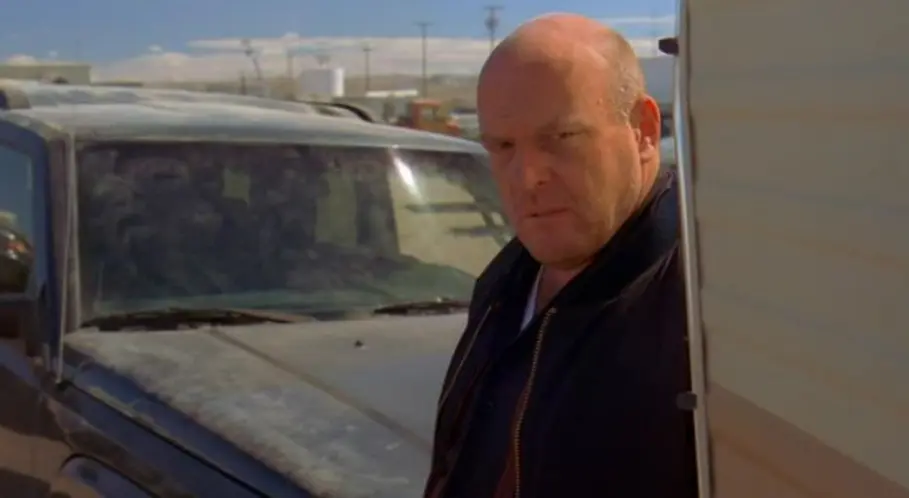
Breaking Bad details reveal why the series is obsessively precise
Breaking Bad details are one of the main reasons the series is still discussed years after it ended. Viewers already know that the show is filled with symbolism, foreshadowing, and visual storytelling. But some moments are so subtle, so brief, that they are almost impossible to notice on a first—or even fifth—watch.
These are not random frames. They are deliberate choices that quietly prepare the audience for future events. Below are two scenes that perfectly prove how Breaking Bad operates on an almost obsessive level of detail.
Tuco Salamanca and a smile that predicts death
One of the most unforgettable early villains in Breaking Bad is Tuco Salamanca. Even though he appears in only a handful of episodes during Season 1 and early Season 2, his presence leaves a lasting impact.
In one iconic scene, Jesse Pinkman visits Tuco with Walter White to sell their meth. Tuco loves the product and casually says the deal is done and they can leave. Jesse, understandably, asks about the money.
That single question triggers Tuco’s violent paranoia.
Instead of answering, Tuco asks Jesse if he doesn’t trust him—then begins beating him brutally with a bag full of cash. The violence is sudden, shocking, and hard to watch. But the real detail happens in the background.

For a split second, the camera cuts to Tuco’s associate No-Doze, who is watching Jesse get beaten nearly to death—and smiling.
That smile lasts only a moment. Many viewers never notice it.
Just two episodes later, Tuco beats No-Doze to death with his bare hands at a junkyard for speaking out of turn.
This tiny reaction shot silently foreshadows No-Doze’s fate. The show tells you exactly what kind of world this is: violence is not just expected, it’s cyclical. Enjoying brutality does not protect you from becoming its victim.
One Minute: the blink-and-you-miss-it warning

The second example comes from one of the most tense episodes in the entire series: One Minute.
In this episode, Hank Schrader has just turned in his gun and badge. Moments later, he receives a mysterious phone call that strongly suggests his life is in danger.
What follows is exactly one minute of screen time.
For sixty agonizing seconds, the camera stays with Hank as he waits in his car. We see the world through his eyes: pedestrians, reflections, passing vehicles, everyday life continuing while something terrible is about to happen. The tension is unbearable because nothing is happening—and everything is happening.
During this minute, there is a single-frame glimpse of one of Salamanca twins watching Hank from a distance.
It lasts less than a second.
Most viewers never see it, even after multiple rewatches. But it is there. The danger is already present, already watching, already committed.
Seconds later, the twins attack, and Hank is forced into a brutal two-versus-one fight that nearly kills him.
Why these moments matter
These scenes are not flashy. They are not explained with dialogue. The show never points at them and says, “This is important.”
That is exactly why they work.
Breaking Bad trusts its audience. It uses visual language the way great cinema does—allowing meaning to exist even if the viewer doesn’t consciously notice it. These Breaking Bad details reward attention, patience, and rewatching.
They prove that every frame matters. Even a smile in the background. Even a face on the screen for a fraction of a second.
This level of craftsmanship is why Breaking Bad is not just a great TV show, but one of the most meticulously constructed series ever made.
Leave a Reply