James
James
Google has officially released its long-awaited Android usage statistics, and the latest figures paint a fascinating picture of how the Android ecosystem is evolving in 2026. Based on data collected on December 1, 2025, the report reveals that newer Android versions—particularly Android 16 and Android 15—are being adopted faster than many analysts previously expected.
While Android fragmentation has long been one of the platform’s biggest challenges, these new numbers suggest that Google’s recent efforts to modernize update delivery and extend software support may finally be paying off.
Android 16 Shows Strong Early Momentum
One of the most striking revelations in the report is the rapid rise of Android 16, which has already reached a 7.5% global usage share just months after its official release. Compared to previous versions, this represents a noticeable improvement in adoption speed.
For perspective, Android 15 had managed to reach only 4.5% adoption during a similar period earlier in 2025. The difference highlights a growing willingness among manufacturers and users alike to transition to newer versions more quickly.
Industry experts point to several key factors behind this acceleration. First and foremost, Google Pixel devices once again led the way. Pixel phones received Android 16 shortly after launch, instantly adding millions of active devices to the new version’s user base. In addition, Google’s modular system updates have reduced dependency on full OS upgrades, making transitions smoother for both manufacturers and users.
Android 15 Emerges as the Most Popular Version
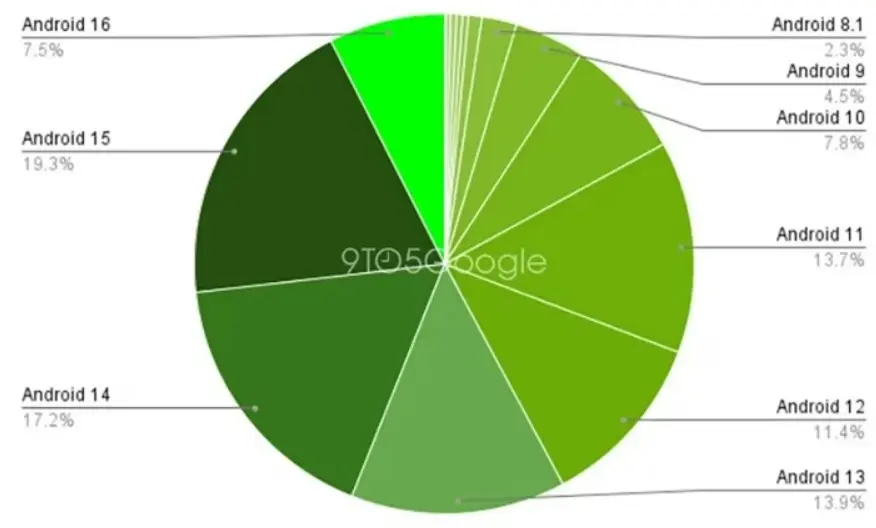
Despite Android 16’s impressive growth, Android 15 currently dominates the ecosystem, holding the top position with 19.3% usage. This makes it the most widely used Android version worldwide as of early 2026.
Close behind are:
- Android 14 with 17.2%
- Android 13 with 13.9%
- Android 11 with a surprisingly resilient 13.7%
The continued presence of Android 11 demonstrates how long older versions can remain active, particularly in regions where users upgrade devices less frequently or where manufacturers slow down major updates.
Interestingly, the report also confirms that Android 4.4 KitKat has officially disappeared from Google’s distribution chart. Once one of the most popular Android releases in history, KitKat’s removal marks the symbolic end of a decade-old chapter in Android’s evolution.
Full Android Version Distribution Breakdown
According to Google’s official data, the current Android version usage is as follows:
- Android 16: 7.5%
- Android 15: 19.3%
- Android 14: 17.2%
- Android 13: 13.9%
- Android 12: 11.4%
- Android 11: 13.7%
- Android 10: 7.8%
- Android 9: 4.5%
- Android 8.1: 2.3%
- Android 8.0 and older: under 1% each
These figures are calculated using a 7-day rolling data collection period, which provides a realistic snapshot of active devices rather than total installations.
Update Speed Still Depends on the Manufacturer
Although Android adoption is improving overall, the report clearly shows that update speed remains heavily dependent on device manufacturers.
As usual, Google Pixel phones were first in line for Android 16. Samsung, the world’s largest Android manufacturer, began rolling out Android 16 to its Galaxy lineup around September, several months after Google’s initial release.
Meanwhile, brands such as Oppo and OnePlus delivered Android 16 updates toward the end of 2025, while smaller and more boutique manufacturers like Nothing joined the rollout even later. This staggered update schedule continues to influence adoption rates, despite Google’s ongoing efforts to standardize the process.
Why Users Are Upgrading Faster Than Before
Another important takeaway from the data is the role of security and privacy improvements in driving upgrades. Android 16 introduces enhanced theft protection, stronger identity verification, improved background app management, and more granular privacy controls.
Google has also emphasized longer software support policies, with many manufacturers now offering four to seven years of updates on flagship devices. This shift has increased user confidence and reduced hesitation when upgrading to the latest Android version.
Fragmentation Isn’t Gone—But It’s More Manageable
While Android fragmentation has not disappeared entirely, the latest usage statistics suggest it is becoming more controlled and predictable. Fewer extremely old versions remain active, and newer releases are reaching users at a faster pace than in previous years.
If current trends continue, Android 16 is expected to climb significantly throughout 2026, potentially overtaking Android 15 sooner than many expect. This would mark a major milestone for Google in its long-running effort to modernize the Android ecosystem.
A Turning Point for the Android Ecosystem?
Taken together, the latest Android usage statistics suggest that the platform may be entering a new phase—one defined by faster updates, longer support cycles, and improved security standards. While challenges remain, the data indicates real progress compared to previous years.
As manufacturers continue to refine their update strategies, Android users worldwide may finally begin to experience a more unified and up-to-date ecosystem.
Which Android version are you currently using, and do you feel your phone manufacturer delivers updates fast enough?