 James
James
Iron Age Inscribed Weight has been discovered in an archaeological site in northern Iberia, offering one of the earliest examples of writing in the region. The find sheds light on the literacy, economy, and social organization of pre-Roman communities.
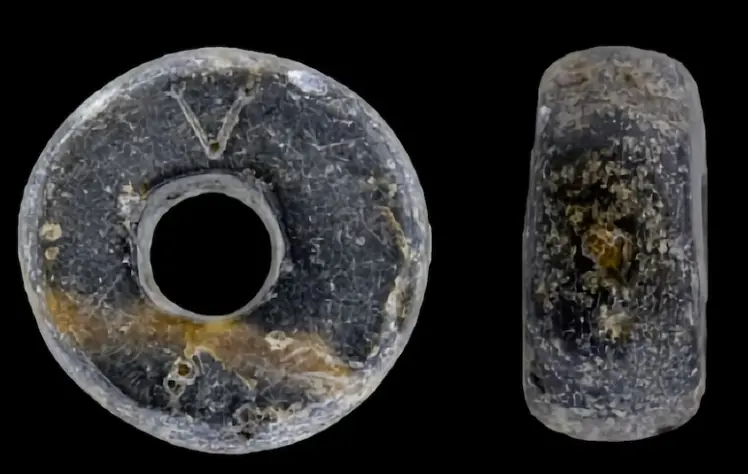
Archaeologists working at La Peña del Castro, located in La Ercina in the province of León, Spain, identified a small artifact linked to textile production—a spindle weight—with an inscription in the Keltiberian alphabet. Dating back to the 1st century BCE, this inscribed weight represents one of the earliest known alphabetic writings in northern Iberia.
A Rare Early Writing Example
The presence of writing in this artifact is particularly significant because literacy was not common in northern Iberia before Roman influence. The object’s position within the settlement and the characteristics of the local talc stone from which it was made strongly suggest that it was produced locally. This supports the hypothesis that certain segments of the community were literate and could apply writing for practical or symbolic purposes.
Since 2013, La Peña del Castro has been the focus of systematic archaeological excavations, with campaigns continuing through 2019. Among the discoveries was a storage area reflecting the settlement’s economic and social organization. Researchers found baskets of seeds, dried cattle meat, and several tools. However, the inscribed spindle weight stood out for its cultural and historical importance.
Social and Symbolic Significance
The inscription carved onto the weight may have functioned as a property mark, a practice common in Iron Age societies such as the neighboring Vacceo culture. Yet, the artifact’s uniqueness within the site suggests it may also have held symbolic or prestige value, distinguishing the owner in the community’s social hierarchy.
This inscribed object reflects broader societal transformations at La Peña del Castro during the Iron Age, including population growth, increased social differentiation, agricultural surplus, and expanding trade networks across plateau and mountainous regions. The emergence of alphabetic symbols indicates that certain individuals had knowledge of writing, using it either practically or symbolically.
Local Production and Cultural Insights
The spindle weight was crafted from talc stone sourced near the site, confirming it was locally produced rather than imported. This suggests that the Keltiberian inscription represents an indigenous knowledge system, potentially influenced by contact with other cultures.
The research, recently published in Paleohispánica, highlights not only the presence of early writing in northwestern Iberia but also the complex cultural and social dynamics of pre-Roman communities. La Peña del Castro’s inscribed weight contributes to a broader understanding of literacy, daily life, and interaction among ancient Iberian societies.
As more discoveries like this surface, the history of pre-Roman northern Iberia becomes richer and more nuanced, revealing details of everyday life, societal structures, and cross-cultural connections previously unknown.


