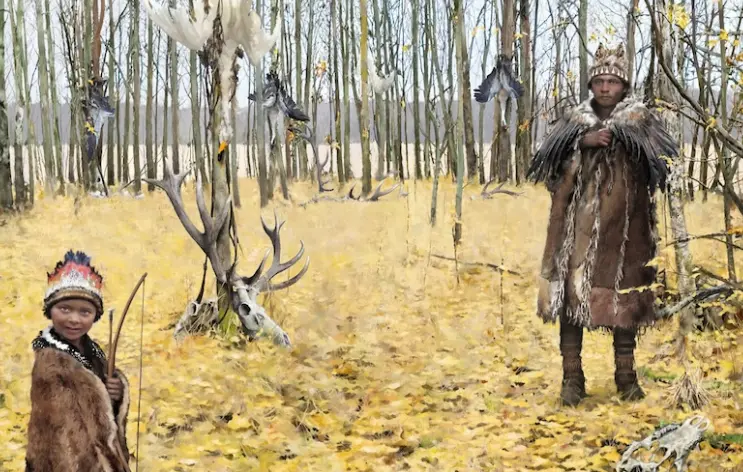

7,000-Year-Old Burials are offering remarkable new insights into how prehistoric communities treated their dead, according to a recent archaeological study examining microscopic remains of clothing and burial items. The research focuses on graves dating back nearly seven millennia, revealing that the deceased were often buried wearing elaborate garments made from fur, feathers, and animal skins.
The study centers on the Mesolithic burial grounds of Skateholm I and II, located in southern Sweden’s Skåne region. A total of 87 graves were documented, with 35 of them analyzed using a cutting-edge microarchaeological technique. These cemeteries are considered among the most important Mesolithic burial sites in Northern Europe.
A New Way to Detect Ancient Clothing
Archaeological excavations carried out in the 1980s uncovered stone tools, animal bones, antlers, and teeth at Skateholm. However, organic materials like clothing were long assumed to be lost due to poor preservation conditions. That assumption is now being challenged.
Researchers from the University of Helsinki’s Animals Make Identities project developed a water-based fiber separation method that allows scientists to identify microscopic traces of hair, fur, and feathers preserved in burial soil. This study marks the largest application of this method to date.
According to archaeologist Tuija Kirkinen, who led the analysis, the technique is not limited to graves alone and could be applied to many types of archaeological material. While identifying feathers and hair at the species level remains difficult, the method is already producing valuable results.
The Cultural Meaning of Birds and Feathers
One of the most striking findings is the frequent presence of bird feathers, especially around the head area of the deceased. Traces of feathers from waterfowl, owls, partridges, and birds of prey such as hawks or eagles suggest that many individuals were buried wearing impressive feathered headdresses.
Professor Kristiina Mannermaa, the project’s lead researcher, emphasizes that these findings highlight the symbolic importance of birds and feathers in Mesolithic society. The use of such materials points to rituals, identity markers, and possibly social status expressed through clothing.
What Mesolithic People Wore in Death
Knowledge of Mesolithic clothing has long been limited because soft organic materials rarely survive unless preserved in extreme environments like glaciers or underwater sites. Famous examples like Ötzi the Iceman were only possible due to exceptional conditions.
This new method changes that perspective. Even in areas where preservation is poor, microscopic fibers can still tell a story.
The study reveals that the people buried at Skateholm were dressed in garments made from the skins of aquatic birds, mustelids such as weasels, wild cats, and other fur-bearing animals. Large mammals, including deer and possibly wild cattle or European bison, were also represented.
Fur and Feather Footwear Discovered
Perhaps the most fascinating discovery comes from graves previously thought to contain no burial goods. Even these “empty” graves showed traces of fur and feathers.
In one case, the grave of a woman over the age of 60 contained white winter fur from a stoat, brown cat fur, and fragments of bird feathers around her feet. Researchers believe she may have been buried wearing multicolored footwear made from fur, feathers, or bird skin.
This finding suggests that clothing itself—rather than separate grave goods—played a central role in Mesolithic burial practices.
Rethinking Identity in the Stone Age
The evidence from these 7,000-Year-Old Burials shows that identity in the Stone Age was deeply connected to animals, symbolism, and ritual clothing. Feathers, fur, and skins were not merely practical materials but powerful cultural symbols used even in death.
As analytical techniques continue to improve, researchers expect even more hidden details of prehistoric life—and death—to come to light.

0 Comments