New Dinosaur Species Brazil – Brazilian researchers have unveiled a remarkable discovery: a previously unknown giant dinosaur species, now named Dasosaurus tocantinensis. This extraordinary find marks one of the largest dinosaurs ever identified in Brazil, providing new insight into the prehistoric era of South America and its connections with other continents.
The discovery, published in the Journal of Systematic Palaeontology this month, presents evidence supporting the existence of land connections between South America, Africa, and Europe approximately 120 million years ago.
Fossils Unearthed During Infrastructure Work
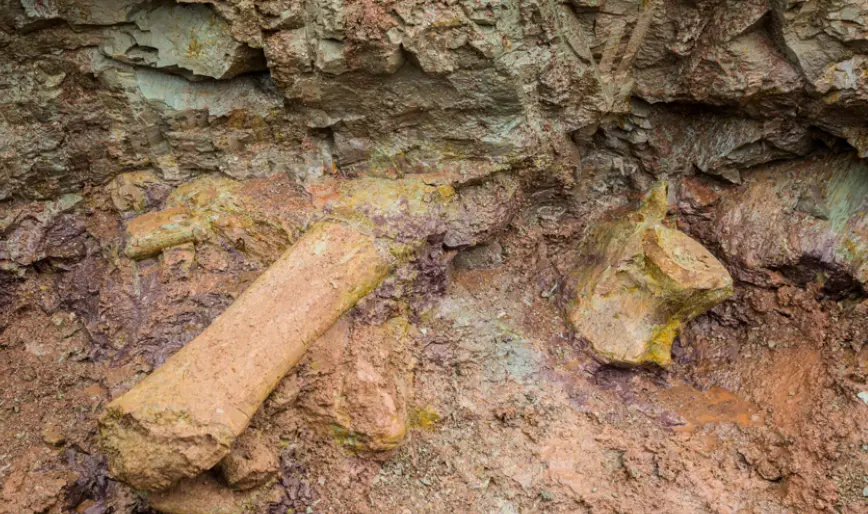
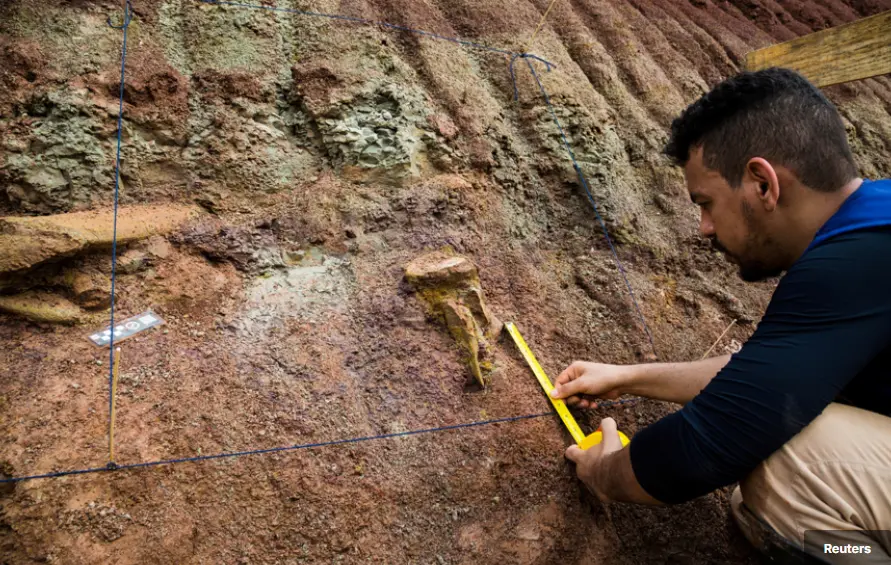
The fossilized remains of Dasosaurus tocantinensis were uncovered in 2021 during infrastructure development near Davinopolis, located in the northeastern Brazilian state of Maranhão. The excavation, led by Dr. Elver Mayer from the Federal University of São Francisco Valley, revealed extraordinary skeletal elements that immediately caught the attention of paleontologists.
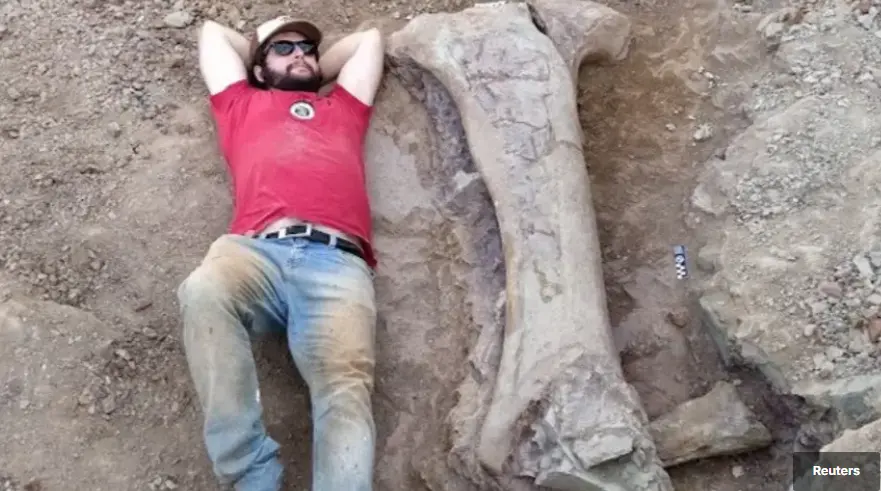
Among the fossils was a femur measuring roughly 1.5 meters in length. Using this massive bone, researchers estimated that the dinosaur could have reached lengths of up to 20 meters and weighed several tons, placing it among Brazil’s largest known prehistoric creatures.
Leonardo Kerber, a paleontologist from the Federal University of Santa Maria who contributed to the research, described the moment of discovery:
“As the excavation progressed, we began to see the outline of the enormous femur. Its size confirmed that this dinosaur was truly gigantic. Today, we know that Dasosaurus ranks among the largest dinosaurs ever found in Brazil.”
A Relative of European Dinosaurs
Interestingly, Dasosaurus tocantinensis appears closely related to Garumbatitan morellensis, a dinosaur species previously identified in Spain. Scientists believe both species share European ancestry and may have migrated to South America via northern Africa around 130 million years ago, before the Atlantic Ocean fully formed.
This migration strengthens the scientific perspective that ancient land bridges connected multiple continents, allowing dinosaurs to travel across vast regions long before the current continental formations existed.
Naming Inspired by Local Geography
The name Dasosaurus tocantinensis pays homage to the Tocantins River, a major waterway near the excavation site. Researchers suggest that this discovery not only expands our understanding of dinosaur evolution in South America but also sheds light on the geological and ecological history of the region.
The sheer size of the fossils, some comparable to the height of a human, emphasizes the massive scale of this species. It also opens new opportunities for research into dinosaur migration patterns, continental drift, and prehistoric ecosystems across South America and beyond.
This remarkable finding underscores Brazil’s growing role in paleontological research and highlights the importance of continued exploration in uncovering the planet’s prehistoric past. Scientists anticipate that further studies of Dasosaurus tocantinensis will reveal more about the life, habits, and environment of one of Brazil’s most fascinating dinosaurs.
 James
James