James
James
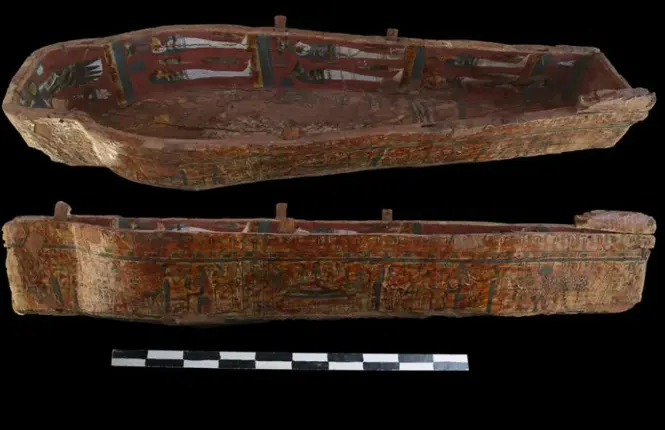
Singers of Amun coffins discovered in Luxor during recent archaeological excavations have revealed an extraordinary burial deposit dating back more than 2,600 years. Archaeologists working in Egypt’s ancient city of Luxor uncovered 22 painted wooden coffins belonging to female temple musicians known as the “Singers of Amun.” Alongside the coffins, researchers also found eight rare sealed vessels, some of which still have their original clay seals intact.
The discovery is being described as one of the most important finds connected to the religious role of women in ancient Egypt during the Third Intermediate Period.
Discovery in Luxor’s Asasif Necropolis
The discovery took place on the West Bank of Luxor, in the southwestern area of the Asasif Necropolis. In ancient times, this part of Thebes served as an important burial ground for high-ranking officials, priests, and temple workers.
Excavations at the site are being carried out by a joint archaeological team from Egypt’s Supreme Council of Antiquities and the Zahi Hawass Foundation for Archaeology and Heritage.
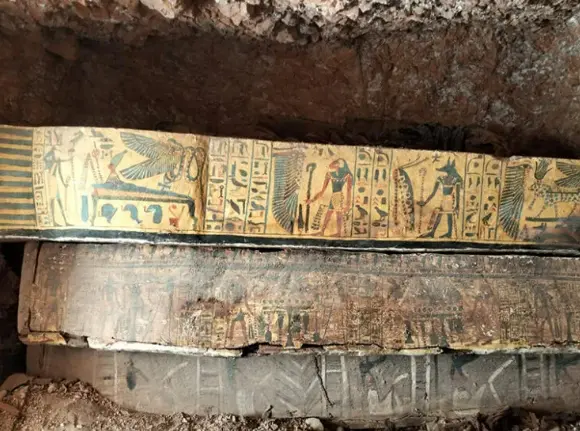
During their work, archaeologists uncovered a rectangular rock-cut chamber carved directly into the stone. Inside the chamber, they discovered rows of wooden coffins stacked carefully on top of each other.
Experts believe the chamber was not originally designed as a primary tomb. Instead, it appears to have been used as a collective burial storage chamber, possibly created to protect burials during periods of instability or tomb robberies.
Carefully Arranged Burial Chamber
Inside the chamber, researchers identified 22 wooden coffins arranged in 10 horizontal rows.
One unusual detail immediately caught the attention of archaeologists:
the coffin lids had been separated from the bodies of the coffins and placed in a different arrangement.
According to specialists, this method was likely used to save space and allow more burials inside the small chamber.
However, the arrangement does not appear random. Instead, it suggests a planned and organized effort to store multiple burials together.
Initial analysis indicates the coffins date to approximately 1070–664 BCE, placing them in the Third Intermediate Period, between Egypt’s 21st and 25th Dynasties.
This was a time when Egypt’s central political authority weakened after the New Kingdom, but religious institutions—especially the Amun priesthood in Thebes—gained enormous power and influence.
The Title “Singer of Amun”
One of the most interesting aspects of the discovery is the inscriptions found on the coffins.
Rather than personal names, many of the coffins repeat the same title:
“Singer of Amun.”
This title refers to female religious officials who served in the cult of the god Amun, particularly in the temples of Karnak.
These women were responsible for performing sacred hymns, musical rituals, and ceremonial chants during temple ceremonies. Music played a crucial role in ancient Egyptian religious practices, and temple musicians were considered an essential part of major rituals.
Finding so many coffins with the same title in one location raises new questions about how temple musicians were buried during this period.
Archaeologists believe the discovery could offer valuable insight into the social and religious status of women in ancient Egyptian temple hierarchies.
During the Third Intermediate Period, Thebes was not only a religious center but also a powerful economic and political hub, largely because of the influence of the Amun priesthood.
Sealed Jars Could Contain Rare Evidence
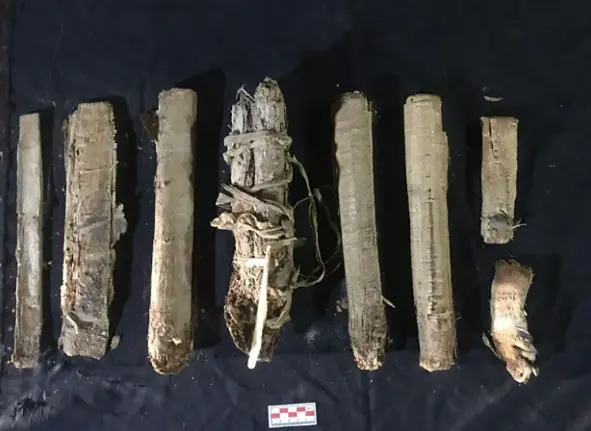
In addition to the coffins, archaeologists also uncovered several ceramic vessels likely used in the mummification process.
The most remarkable find among them is a large ceramic container that held eight sealed jars.
Some of these jars still retain their original clay seals, meaning they may have remained untouched for more than two millennia.
Because the seals are intact, researchers believe the jars could still contain organic materials, ritual substances, or embalming ingredients used during the mummification process.
Experts describe the vessels as a “potential treasure of information.”
Once conservation work is completed, scientists plan to conduct laboratory analysis on the contents of the jars. These tests could reveal new details about ancient Egyptian embalming techniques and ritual practices.
Restoration Efforts Begin Immediately
Egypt’s Minister of Tourism and Antiquities, Sherif Fathy, confirmed that the coffins are currently in a fragile state.
The wooden structures and painted surfaces have been exposed to environmental stress over the centuries, making them particularly delicate.
As a result, conservation teams quickly began emergency restoration work.
So far, specialists have:
- Strengthened weakened wood fibers
- Stabilized flaking paint pigments
- Carefully cleaned the surfaces using controlled conservation methods
The goal is to preserve the vivid colors and inscriptions on the coffins before transferring them to secure storage facilities.
Many of the coffins still retain traces of bright decorative pigments, offering valuable insight into ancient Egyptian funerary art.
Zahi Hawass Calls Discovery “Extraordinary”
Famous Egyptian archaeologist Zahi Hawass, who leads the excavation mission, described the discovery as “extraordinary for the archaeology of the Third Intermediate Period.”
According to Hawass, the find could significantly expand our understanding of:
- Female religious roles in ancient Egypt
- Temple communities in Thebes
- Burial practices during times of political change
The discovery also highlights the continuing importance of Luxor as one of the world’s richest archaeological regions.
Searching for the Original Tombs
Although the coffins were found inside a storage chamber, researchers believe this location was not their original burial site.
Scientists are now attempting to locate the original tombs where the women were first buried.
One theory suggests that the coffins may have been relocated during ancient times to protect them from tomb robbers.
Another possibility is that the burials were reorganized as part of a large-scale cemetery management effort during later periods.
Further excavations in the surrounding area may reveal more clues about this process.
Luxor: The World’s Greatest Open-Air Museum
Luxor sits on the site of the ancient Egyptian city of Thebes, one of the most powerful capitals in Egypt’s long history.
Today, the region is often called “the world’s largest open-air museum.”
The discovery in the Asasif Necropolis adds another important chapter to the long story of this remarkable archaeological landscape.
More importantly, the find offers a rare opportunity to explore the religious and cultural roles played by women in ancient Egyptian society, especially those who served the powerful cult of Amun.
As research continues, archaeologists hope the coffins and sealed jars will reveal even more secrets about the lives—and deaths—of the mysterious Singers of Amun.