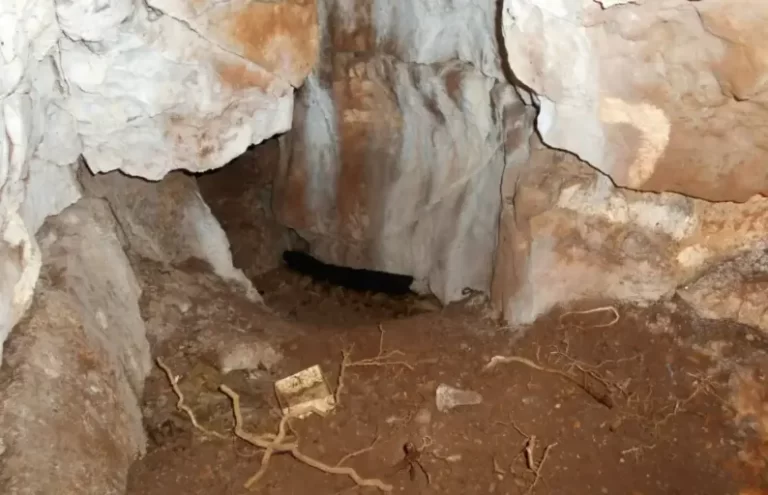

11,000-year-old girl remains discovered in a small limestone cave in Cumbria have now been scientifically identified through ancient DNA analysis, confirming the child’s age and biological sex for the first time. Researchers revealed that the skeleton belonged to a girl aged between approximately 2.5 and 3.5 years, making her the oldest scientifically confirmed individual in North Britain whose age and sex are known.
The remains were uncovered inside Heaning Wood Bone Cave, a modest cave site that has quietly preserved traces of human life from the period immediately after the last Ice Age. Radiocarbon dating places the burial between 9290 and 8925 BCE, during the Early Mesolithic period, a time when retreating glaciers allowed forests to spread again and hunter-gatherer communities gradually returned to northern landscapes.
DNA analysis reveals identity after 11,000 years
The international research team, led by University of Lancashire, managed to extract usable genetic material from bones that were in a fragile state of preservation. Achieving this level of precision from Early Holocene remains is extremely rare, especially in northern regions where harsh environmental conditions often destroy organic material.
Thanks to advanced ancient DNA techniques, scientists were able to confirm both the biological sex and the young age of the child with confidence. This breakthrough provides a level of personal detail that is seldom possible for individuals who lived more than eleven millennia ago.
The findings were published in the academic journal Proceedings of the Prehistoric Society, where researchers emphasized the discovery’s importance for understanding Mesolithic populations in North Britain.
A deliberate and meaningful cave burial
Archaeological evidence from the cave strongly suggests that the child’s burial was intentional rather than accidental. Alongside the skeletal remains, archaeologists found perforated seashell beads, deer teeth, and other decorative items, all dating to roughly the same period.
These objects indicate that the burial involved symbolic behavior and ritual practices. Even at such an early date, communities appear to have marked death with care, remembrance, and possibly spiritual meaning. The presence of personal ornaments suggests that mourning rituals and social bonds played an important role in post-Ice Age societies.
A cave used for thousands of years
Excavations at Heaning Wood Bone Cave were first initiated in 2016 by local researcher Martin Stables. The site has since revealed a much longer and more complex history than initially expected. In total, remains of at least eight individuals have been identified, spanning three distinct phases from the Early Mesolithic through to the Early Bronze Age.
This long-term use indicates that the cave held ritual or cultural significance for generations. Rather than being a one-time burial location, it appears to have served as a sacred or ceremonial space over several thousand years.
Rethinking early life in North Britain
Human remains from northern Britain are exceptionally rare due to glacial activity and soil conditions that limit preservation. For this reason, an 11,000-year-old girl whose identity has been scientifically verified fills a major gap in the region’s prehistoric record.
Beyond confirming early human presence, the burial also reveals that symbolic thinking, grief, and ritual practices continued after the Ice Age. The discovery provides a more human perspective on Mesolithic communities, reminding us that even in deep prehistory, families cared for their children and honored their dead.
With her identity now revealed, one of North Britain’s earliest inhabitants has finally taken her place in history—not as an anonymous fossil, but as a child who lived, was mourned, and remembered more than eleven thousand years ago.

0 Comments