James
James
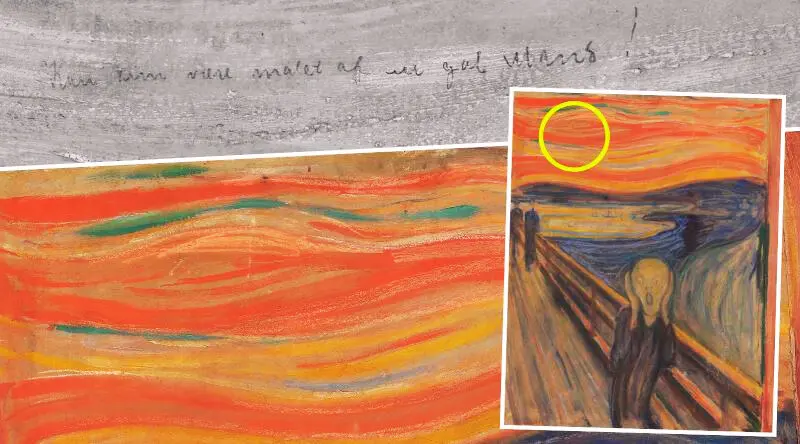
Few paintings in art history capture human anxiety as vividly as Edvard Munch’s iconic masterpiece, The Scream. Yet behind its swirling skies and tormented figure lies a mystery that haunted the artist’s life — a hidden inscription scrawled faintly across the top corner:
“Could only have been painted by a madman.”
The Secret Note No One Noticed for a Decade
Although The Scream was painted in 1893, the faint pencil writing wasn’t noticed until 1904, when a Danish art critic spotted it. For more than a century, experts debated whether it was graffiti from a viewer or a later addition. But modern infrared analysis at the National Museum of Norway confirmed: the handwriting belonged to Munch himself.
The artist had inscribed the words in despair after harsh criticism from early exhibitions. Many claimed he was mentally unstable and should be institutionalized. These judgments deeply scarred him, echoing his lifelong fear of inheriting mental illness — both his father and sister suffered from psychological disorders.
The Moment That Inspired The Scream
In his diary, Munch recalled the exact moment of inspiration:
“One evening I was walking along the road with two friends — the sun was setting — suddenly the sky turned blood red. I paused, feeling exhausted, and leaned against the railing. Over the blue-black fjord and city hung blood and tongues of fire. My friends walked on, and I stood there trembling with anxiety — I sensed an infinite scream passing through nature.”
This was not simply a painting of fear; it was Munch’s personal breakdown captured on canvas.
Madness, Fear, and the Artist’s Own Struggles
The criticism crushed him. By 1908, overwhelmed by anxiety, alcoholism, and exhaustion, Munch was hospitalized in Copenhagen after a nervous breakdown.
Despite recovery, his life remained shadowed by misfortune — his works were later confiscated by Hitler’s regime in 1937 as “degenerate art.”
Even illness found him again: Munch survived the Spanish flu pandemic in 1919, but the trauma of isolation deepened his melancholy.
A Tragic Love Affair: Tulla Larsen
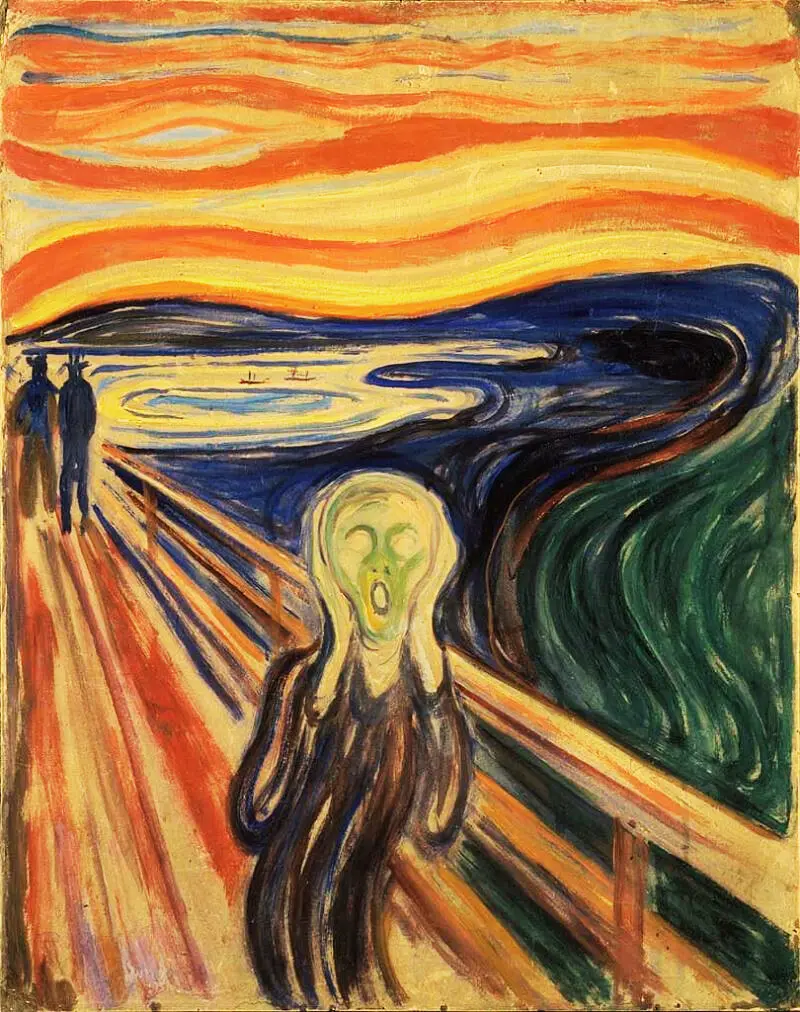
Munch’s relationship with Tulla Larsen, the daughter of a wealthy wine merchant, was equally tormented. He feared women, believing they drained the creative spirit of men. Researchers later discovered that Munch often acted cold or even cruel toward Tulla — a deliberate attempt to push her away.
But Tulla was relentless. Their passionate, unstable relationship lasted four years and ended violently. In 1902, after a heated argument, a gun accidentally discharged, injuring Munch’s hand. The couple separated forever, and Munch kept the scar — both physical and emotional — for life.
He even cut in half a portrait they once made together, a symbolic act of severing the past. The British Museum later restored the painting, now displayed as a reminder of the artist’s pain.
The Scream’s Legacy
Once dismissed as the work of a madman, The Scream became one of the most valuable paintings in history. A pastel version of the artwork sold for $120 million at auction in 2012, making it one of the most expensive pieces ever sold.
Munch’s life was filled with anguish, yet his suffering became the essence of his art. As he once said:
“My fear of life is necessary to me, as is my illness. They are part of me and my art.”